
 Sankalp
Aqua Cap and Bev Cap are the two aluminium ROPP closures R Vision manufactures, and they share more than they differ: both are 28/15 mm, with a PE ring and a TPE liner, rated to 8 bar, and suited to hot fill, cold fill and carbonated products. The difference is the tamper ring and the product each is built around. Aqua Cap has a three-part break-system ring that breaks apart on first opening, for packaged drinking water. Bev Cap has a ring that breaks but stays attached so the bottle reseals, a PVC-free liner and three ring variants, for beverages.
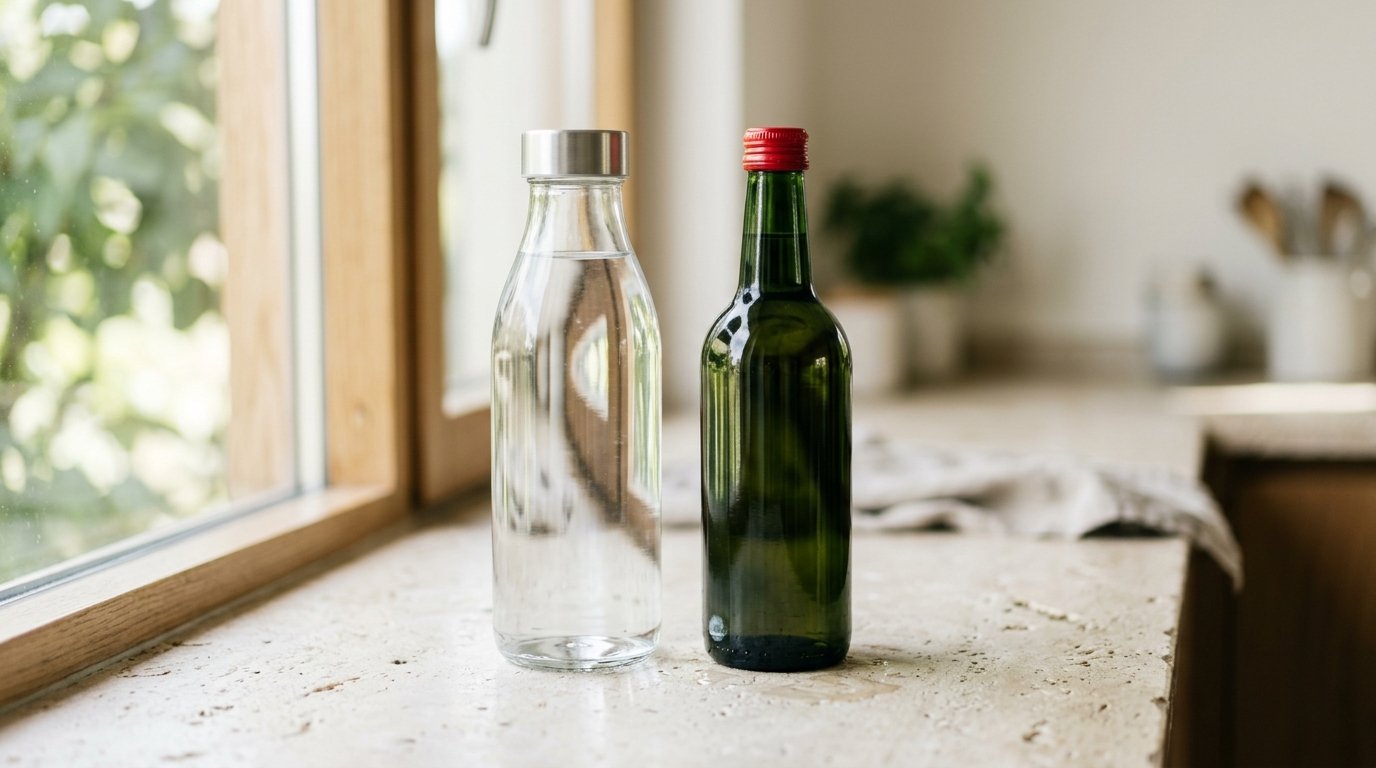
Aqua Cap and Bev Cap side by side
The table puts every on-record line of the two specifications next to each other. Rows marked “Same” need no decision.
| Specification | Aqua Cap | Bev Cap |
|---|---|---|
| Built for | Packaged drinking water, premium and niche brands | Carbonated soft drinks, juices and other beverages |
| Size | 28/15 mm | 28/15 mm (same) |
| Cap material | Aluminium | Aluminium (same) |
| Ring material | PE (polyethylene) | PE (polyethylene) (same) |
| Liner | TPE (thermoplastic elastomer) | TPE (thermoplastic elastomer), PVC-free |
| Pressure rating | Up to 8 bar | Up to 8 bar (same) |
| Tamper system | Three-part break-system ring, breaks apart on first opening | Pilfer-proof ring breaks on first opening and stays attached |
| Resealing | Not the design aim; the ring is built to show opening at a glance | Designed to reseal with the broken ring still visible |
| Ring variants | Break-system ring | Round Ring, Two Slit, Five Slit |
| Fill types | Hot fill, cold fill, carbonated | Hot fill, cold fill, carbonated (same) |
| Neck finishes | MCA I/II/III, MCA 7.5 R, MCA 7.5 RF, PET BPF | Same |
| Top decoration | Plain, litho printed, embossed | Plain, litho printed, hot foiling |
| Side decoration | Plain, litho printed | Plain, litho printed (same) |
| Colours | Matched to brand | Matched to brand (same) |
| Machinery | Standard roll-on application machinery | Same |
| Standards | Adhering to USFDA and EU standards | Same |
| Packing and storage | PE bags in export-grade cartons, 5 to 30 °C | Same |
| Shelf life | Two years from manufacturing date | Same |
| Minimum order | 50,000 plain silver, 200,000 plain colours, 300,000 litho | Same |
| Lead time | 4 to 6 weeks | Same |
Each closure’s specification is also laid out as a single printable table on the ROPP cap specification sheet.
What the two closures have in common
Both closures are the same shell on the same neck. Each is an aluminium ROPP closure supplied unthreaded, rolled onto a 28 mm neck finish by a standard roll-on capping head, and sealed by a TPE liner compressed against the bottle rim. Because the size and the application machinery are the same, a plant filling water on one line and a beverage on another can run both closures without separate capping hardware. How the rolling works is explained in what is a ROPP cap.
The 8 bar rating is also shared. That matters more for Aqua Cap than it first appears: a water brand launching a sparkling variant does not need to qualify a second closure, because the water closure is already rated for carbonated products. What an 8 bar pressure rating means explains the figure.
Where they differ: the tamper ring
The tamper ring is the real decision between the two. Both rings break the first time the bottle is opened, so both give tamper evidence. What happens next is different.
On Aqua Cap, the three-part break-system ring gives way in its three sections and breaks apart visibly. It cannot be pushed back together, so anyone picking up the bottle can see at a glance whether it has been opened. For packaged drinking water, where the buyer’s whole question is whether the bottle left the plant sealed, that at-a-glance signal is the product. The mechanism is covered in the three-part tamper break system.
On Bev Cap, the ring breaks but stays with the closure. The drinker can screw the cap back on between sips, and the broken ring still shows the original seal is gone. A beverage finished over an hour needs that, and no loose ring is left behind as litter. The three variants differ in how the ring gives way: Round Ring is continuous, Two Slit controls the break at two points, and Five Slit spreads it across five. The design is explained in resealable tamper-evident caps.
Neither closure is tamper-proof, and no closure honestly is; both are tamper-evident. Tamper evident vs tamper resistant vs tamper proof sets out what each term can claim.
Where they differ: liner and decoration
Both liners are TPE, and Bev Cap’s is specified PVC-free, which matters to beverage brands moving off PVC liners. What plastic the Bev Cap uses is a common question: the ring is PE (polyethylene) and the liner is TPE. Why that liner choice matters for drinks is covered in why PVC-free liners matter.
On decoration, both take plain, colour and litho printed finishes on the top and side. Aqua Cap’s top can be embossed; Bev Cap’s top can be hot foiled. Print, emboss and foil options are compared in custom printed and embossed bottle caps.
Which one to choose
Choose by the product in the bottle and how it is drunk.
| Your product | Choose | Why |
|---|---|---|
| Still packaged drinking water | Aqua Cap | Three-part ring shows opening at a glance |
| Premium or niche water brand wanting shelf presence | Aqua Cap | Embossed or litho printed metal top |
| Sparkling water | Aqua Cap | Rated to 8 bar, suited to carbonated products |
| Carbonated soft drink | Bev Cap | Rated to 8 bar, PVC-free liner, reseals |
| Juice or hot-filled drink | Bev Cap | Suits hot fill; drink can be closed again |
| Functional or flavoured drink consumed over time | Bev Cap | Retained ring lets the bottle reseal |
| Brand wanting a foil-finished top | Bev Cap | Hot foiling is a Bev Cap top option |
If you are a water brand, start with Aqua Cap. If you bottle anything a consumer drinks over time, start with Bev Cap. If the answer is not clear, sample both on your own capping head, and ask for all three Bev Cap ring variants in the set.
Getting samples
Send your bottle’s neck finish drawing or a sample bottle, the product and fill type, the expected volume and the decoration you want. Both closures carry the same order terms: 50,000 caps minimum in plain silver, 200,000 in plain colours, 300,000 litho printed, and a lead time of 4 to 6 weeks, set out in bulk ROPP cap orders. Buyers’ questions on each closure are collected in the Aqua Cap FAQ and the Bev Cap FAQ, and the full product pages are Aqua Cap and Bev Cap. To request samples, contact R Vision.
Frequently asked questions
What is the difference between Aqua Cap and Bev Cap?
The tamper ring and the product. Aqua Cap has a three-part break-system ring that breaks apart on first opening and is built for packaged drinking water. Bev Cap’s ring breaks but stays attached so the bottle reseals, it has a PVC-free liner and three ring variants, and it is built for beverages. Size, pressure rating and order terms are the same.
What size are Aqua Cap and Bev Cap?
Both are 28/15 mm aluminium ROPP closures, with a 28 mm nominal diameter matched to a 28 mm neck finish and a 15 mm height. R Vision manufactures this one size.
What type of plastic is used in Bev Cap?
Bev Cap has an aluminium cap with a PE (polyethylene) tamper ring and a TPE (thermoplastic elastomer) liner specified PVC-free. Aqua Cap uses the same combination of aluminium cap, PE ring and TPE liner.
Can Aqua Cap be used for carbonated drinks?
Yes. Aqua Cap is rated to 8 bar and suits hot fill, cold fill and carbonated products, so a water brand can use it on sparkling water as well as still. For soft drinks consumed over time, Bev Cap’s resealing ring is usually the better fit.
Do Aqua Cap and Bev Cap run on the same capping machine?
Yes. Both are 28/15 mm closures applied on standard roll-on application machinery, so the same capping head can run either on a matching 28 mm neck finish.
Is the minimum order different for the two closures?
No. Both have a minimum order of 50,000 caps in plain silver, 200,000 in plain colours and 300,000 litho printed, with a lead time of 4 to 6 weeks.
R Vision Pvt. Ltd manufactures Aqua Cap and Bev Cap at MIDC Malegaon, Sinnar, Nashik, Maharashtra. The whole range is listed on Products.