
 Sankalp
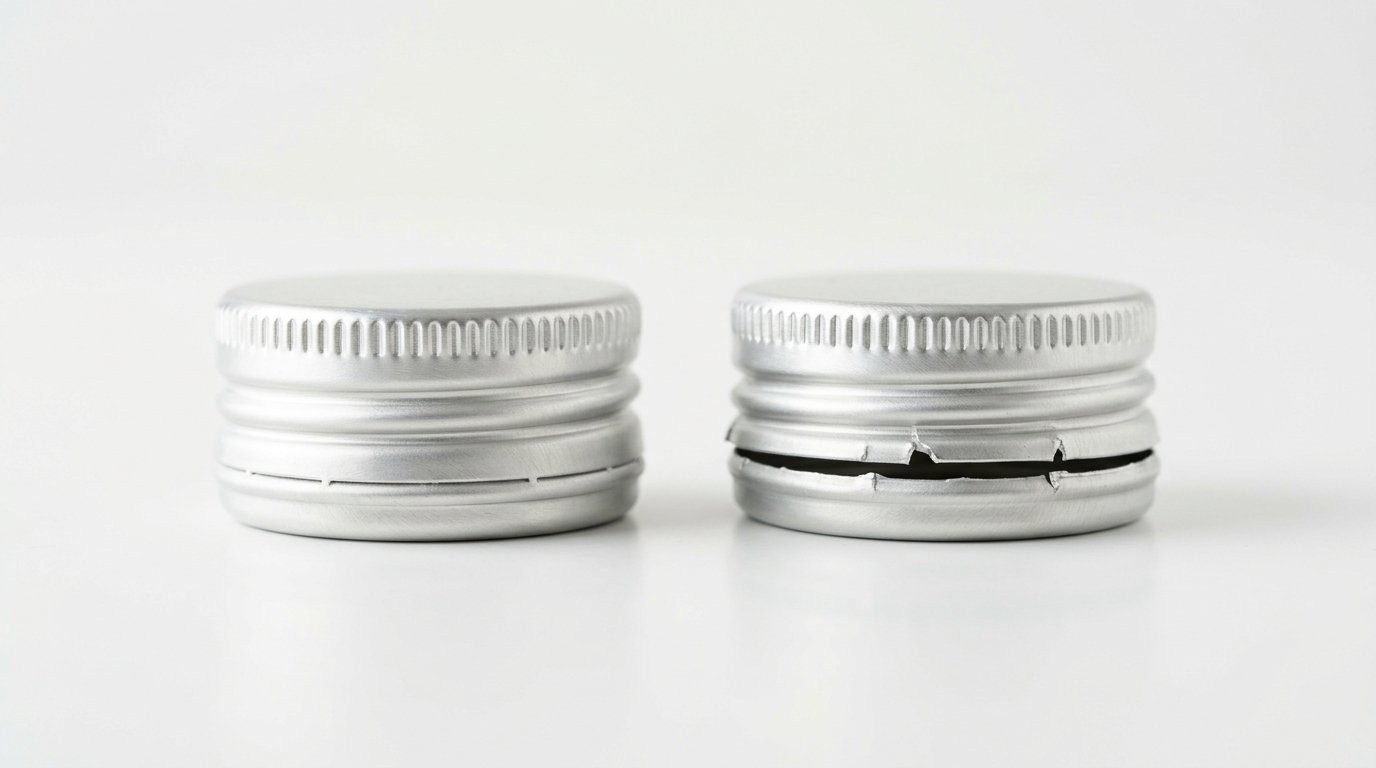
Tamper evident means a pack shows a clear, irreversible sign once it has been opened or interfered with. Tamper resistant means a pack is made harder to open, so interference takes effort, a tool or a technique. Tamper proof claims a pack cannot be interfered with at all, and no pack meets that claim, which is why regulators and packaging engineers do not use it. Bottle closures for water and beverages, including R Vision’s two, are tamper evident.
The three terms side by side
The difference is in what each term promises, and so in what a buyer can hold a supplier to. Tamper evident and tamper resistant both describe something that can be specified and tested. Tamper proof describes an outcome nobody can test for.
| Tamper evident | Tamper resistant | Tamper proof | |
|---|---|---|---|
| What it claims | Interference leaves a visible sign that cannot be undone | Interference is made harder or slower | Interference is impossible |
| What it does not claim | That opening is prevented | That an attempt will leave a sign | Nothing is left out, which is the problem |
| Example on a bottle | A break ring on a ROPP cap that splits on the first turn | A push-and-turn child-resistant cap | None exists |
| What a supplier can be held to | Break behaviour: intact through filling and transport, broken on first opening, not restorable | Performance against a defined opening test, such as child-resistance testing | Nothing measurable |
| How a buyer checks it | Open samples and inspect the break; look for rings already parted in unopened cases | Run or request the named test | It cannot be checked |
| Honest use on a pack or quote | Yes | Yes, where the test has been passed | No |
For the closure-specific view, including how a break ring is built, see what is a tamper-evident cap.
What each term can be held to
A term is only useful in a specification if it can fail a test. Read that way, the three sort themselves out quickly.
Tamper evident can be written into a closure specification as break behaviour, and it fails in two directions. A ring that parts in the carton makes an unopened bottle look opened. A ring that rides up with the cap and never breaks makes an opened bottle look untouched, which is the worse fault because it removes the signal entirely. Both are traceable to the cap as made or to the capping head, and why tamper bands fail sets out how to tell which.
Tamper resistant is held to a defined opening test. The best-known case is child-resistant packaging, where reclosable packs are tested against ISO 8317 using panels of children and adults. A resistant pack does not have to show that an attempt was made, so resistance and evidence are often combined, for example a child-resistant cap over an induction seal.
Tamper proof cannot be held to anything, because no test can show that a pack is impossible to open. Given time and tools, a glass bottle with any closure on it can be opened. A supplier writing “tamper proof” on a quote is making a claim that the product cannot back.
Why the vocabulary moved away from “proof” and “resistant”
The shift is visible in the most-cited packaging rule on the subject. The United States rule for over-the-counter medicines, written in 1982 after a poisoning case, originally required “tamper-resistant” packaging, and it was later amended to say “tamper-evident”, published today as 21 CFR 211.132 on the eCFR. The change reflected what packaging actually does: it can make interference visible far more reliably than it can stop it.
Food and beverage packaging followed the same logic. The protection a shopper gets from a sealed bottle is the ability to reject one that has been opened, and that depends on evidence rather than resistance.
The Indian regulatory position
No Indian rule names a single tamper-evident method for water or beverages, and none uses “tamper proof” as a standard to meet. The frameworks expect a food-grade, securely sealed, hygienic pack, and a tamper-evident closure is how the industry meets that.
| Product or situation | What applies | Which term it points to |
|---|---|---|
| Packaged drinking water | FSSAI licence, mandatory; IS 14543 is the standard the water is judged against; BIS certification voluntary since 17 October 2024 | Tamper evident: a sealed pack whose seal a buyer can check |
| Soft drinks, juices, other beverages | FSSAI licence and product standards; the Food Safety and Standards (Packaging) Regulations, 2018 for food-contact materials | Tamper evident, in industry practice |
| Liquor | State excise departments, with rules that differ between states | Tamper evident, often with anti-refill features |
| Child-resistant packs for medicines or household chemicals | Product-specific rules and the test the pack is sold against | Tamper resistant, usually combined with evidence |
| A claim printed on a pack or in advertising | Consumer Protection Act, 2019, which treats a false or misleading description of a product as a misleading advertisement | Only a claim the product can support |
Packaged drinking water carries the closest scrutiny. It was reclassified as a high-risk food category on 29 November 2024, and a Scheme of Testing has applied since 1 January 2026, as set out on FSSAI and in BIS certification for a water brand. How these frameworks play out across Indian retail packaging is covered in tamper-evident packaging in India, and the closure side of the spirits segment in liquor bottle caps in India.
The consumer-protection row matters for anyone writing pack copy or a sales sheet. The Department of Consumer Affairs administers the Act, and an absolute claim a brand cannot demonstrate sits badly with it. Tamper evident is a claim a brand can stand behind, because anyone can open a sample and see the evidence.
The words you will meet for the same feature
Closure suppliers, bottlers and regulators use several names for the tamper-evident part of a cap. Most of them describe one component.
| Term | What it means | Same as |
|---|---|---|
| Pilfer-proof ring or pilfer band | The ring at the foot of a ROPP cap that breaks on first opening | The tamper-evident ring |
| Tamper-evident band or tamper band | The same ring, in general packaging language | The pilfer-proof ring |
| Break ring or break-system ring | A ring designed to split visibly, sometimes across several sections | A type of tamper-evident ring |
| Retained ring or ring retention | A ring that stays with the bottle after it breaks, so the cap reseals | A tamper-evident ring with a resealing design |
| Tethered cap | A cap that stays attached to the bottle after opening, for litter reduction | Not the same thing: tethering is about the cap, not tamper evidence |
| Tamper proof | An absolute claim | No component; restate it as evident or resistant |
So a pilfer-proof ring and a tamper-evident ring are the same thing, and “pilfer-proof” is the older trade word. The meaning of that word is unpacked in pilfer meaning in packaging.
Which of the three R Vision closures provide
Both R Vision closures are tamper evident, and neither is described as tamper resistant or tamper proof. They are not sold as child-resistant closures, and a tamper-proof claim is one R Vision does not make.
| Closure | Tamper feature | Behaviour on first opening | Term that applies |
|---|---|---|---|
| Aqua Cap, for packaged drinking water | Three-part break-system ring | Ring splits visibly and cannot be reassembled | Tamper evident |
| Bev Cap, for beverages | Pilfer-proof ring in Round Ring, Two Slit or Five Slit variants | Ring breaks and stays attached, so the bottle reseals | Tamper evident, resealable |
Both are 28/15 mm aluminium closures with a PE ring and a TPE liner, rated to 8 bar. How the water closure’s ring works is described in the three-part tamper break system, and the Bev Cap’s ring behaviour in resealable tamper-evident caps. The products themselves are set out in Aqua Cap and Bev Cap.
How to read supplier claims
Translate the marketing into the term that can be tested, then ask for the evidence that goes with it.
- If a supplier says tamper evident, ask how the first-open signal works, whether it is irreversible, and how the break is checked on incoming lots.
- If a supplier says tamper resistant, ask which test the closure has passed and for the report.
- If a supplier says tamper proof, ask them to restate it as evident or resistant, and treat the original wording as a warning about the rest of the quote.
The documents worth asking for alongside the claim, and what each proves, are listed in quality certificates to ask a cap supplier for. For water and beverage packing the right question is almost always about evidence: can the buyer see whether the bottle was opened.
Frequently asked questions
What is the difference between tamper evident and tamper proof?
Tamper evident means the pack shows a clear, irreversible sign once it has been opened or interfered with. Tamper proof claims the pack cannot be interfered with at all, which no pack achieves. Tamper evident is a real, testable property of a closure, while tamper proof is a claim that cannot be demonstrated.
What is the difference between tamper evident and tamper resistant?
Tamper resistant means the pack is harder to open, such as a push-and-turn child-resistant cap, and it is judged against a defined opening test. Tamper evident means the pack shows that it was opened, such as a break ring on a bottle cap. A resistant pack need not leave a sign, so the two are often combined.
Is a pilfer-proof ring the same as a tamper-evident ring?
Yes. Pilfer-proof ring, pilfer band, tamper band and tamper-evident ring all name the same component: the ring at the foot of a roll-on pilfer-proof cap that breaks the first time the bottle is opened. Pilfer-proof is the older trade word, and tamper evident is the more precise description of what the ring does.
Is anything really tamper proof?
No. Given time, tools or skill, any package can be opened, so no pack is tamper proof. Packaging engineers and regulators avoid the term because it overpromises, and a claim that cannot be demonstrated is risky on a pack sold to consumers. The achievable goals are tamper evident and tamper resistant.
Does Indian law require tamper-evident caps?
No Indian rule names one tamper-evident method for water or beverages. Packaged drinking water needs an FSSAI licence and is judged against IS 14543, and food-contact materials fall under the Packaging Regulations, 2018. Those frameworks expect a food-grade, securely sealed pack, and a tamper-evident closure is how bottlers meet that in practice.
Which do water and beverage brands need?
Water and beverage brands need tamper evidence, because the protection a shopper gets is the ability to see that a bottle has not been opened before buying it. R Vision’s Aqua Cap uses a three-part break ring and Bev Cap a ring that stays attached so the bottle reseals, and both are tamper evident.
Sources
- Food Safety and Standards Authority of India, for licensing, the Packaging Regulations, 2018, and the orders on packaged drinking water.
- Bureau of Indian Standards, for IS 14543 and the voluntary certification scheme.
- Department of Consumer Affairs, for the Consumer Protection Act, 2019.
- ISO, for ISO 8317, child-resistant packaging for reclosable packages.
- eCFR, for 21 CFR 211.132, the tamper-evident packaging rule for over-the-counter medicines in the United States.
To see tamper-evident closures for water and beverages, view the Aqua Cap and Bev Cap pages or contact R Vision. The rest of the closure guides are on the Learn hub.