
 Sankalp
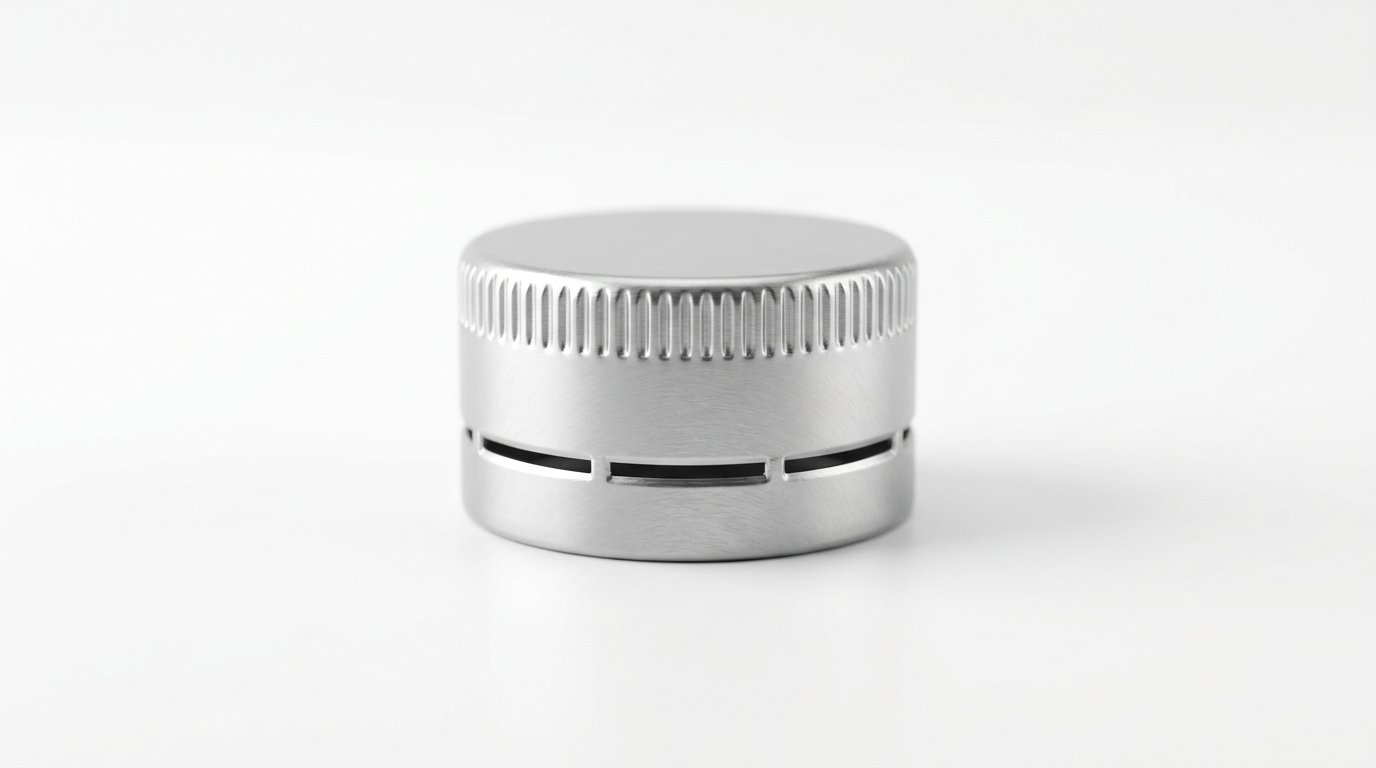
A three-part tamper break system is a pilfer ring, built in three connected sections, that breaks apart the first time a bottle is opened and cannot be reassembled to hide it. On R Vision’s Aqua Cap, this ring gives packaged drinking water a clear, at-a-glance sign that the seal is intact or that the bottle has already been opened. For water, that visible proof is the whole point.
What the three-part break system is
On an aluminium ROPP closure, the lower band, the pilfer ring, is scored so it separates from the cap when the bottle is first twisted open. A three-part break system divides that action across three connected sections of the ring. As the cap turns, the sections give way and the ring drops or splits visibly, leaving unmistakable proof that the seal has been broken.
The value is in what happens next: a broken ring cannot be pushed back together or disguised. So a shopkeeper or a consumer can look at the bottle and know whether it is still factory-sealed, without opening it. That is the defining property of a tamper-evident cap: it does not prevent opening, it reveals it.
For where the pilfer band sits in the overall closure, see parts of a ROPP cap. For the opposite approach, where the ring stays attached so the bottle reseals, see resealable tamper-evident caps, and for the regulatory backdrop, tamper-evident packaging in India.
How it works on Aqua Cap
Aqua Cap is R Vision’s aluminium ROPP closure for packaged drinking water, and its tamper evidence is a three-part break-system ring. The closure is 28/15 mm, uses a TPE liner, and is rated to 8 bar, so the seal itself is secure across still, hot fill, and carbonated water. The three-part ring is the layer that makes tampering visible.
| Element | On Aqua Cap |
|---|---|
| Tamper feature | Three-part break-system ring |
| Behaviour | Breaks visibly on first opening; cannot be reassembled |
| Closure size | 28/15 mm |
| Liner | TPE |
| Pressure rating | Up to 8 bar |
| Standards | Adhering to USFDA and EU standards |
Why visible tamper evidence matters for water
Packaged drinking water is bought on trust. A consumer cannot taste-test a sealed bottle before buying, so the packaging has to signal that the water is genuine and untouched. In India, packaged drinking water is sold under FSSAI rules and judged against BIS standard IS 14543, and a visibly intact seal is a core part of that assurance.
- Trust at the shelf. A clean, unbroken ring tells a buyer the bottle is factory-sealed.
- Proof of first opening. Once the three-part ring breaks, it stays broken, so refilling or re-selling an opened bottle is easy to spot.
- Brand protection. Visible tamper evidence protects the brand against counterfeiting and refill fraud, both real risks in the water category.
Frequently asked questions
What is a three-part tamper break system?
It is a pilfer ring built in three connected sections that breaks apart the first time a bottle is opened. Because a broken ring cannot be reassembled, it gives permanent, visible proof that the seal has been broken.
How is it different from an ordinary pilfer band?
The principle is the same, a scored band that breaks on first opening, but dividing the break across three sections makes the tamper evidence clear and hard to disguise.
Which R Vision product uses it?
Aqua Cap, R Vision’s aluminium ROPP closure for packaged drinking water, uses a three-part break-system ring.
Why is tamper evidence so important for drinking water?
Water is bought on trust and cannot be tested before purchase, so a visibly intact seal is what tells a buyer the bottle is genuine and untouched. It also protects the brand against refill and counterfeit fraud.
To see how the tamper system fits the full closure, visit the Aqua Cap page, the Aqua Cap product listing, or contact R Vision. The break ring is tamper evidence rather than a tamper-proof claim, a distinction drawn out in tamper evident vs tamper resistant vs tamper proof. More closure guides are collected on Learn.