
 Sankalp
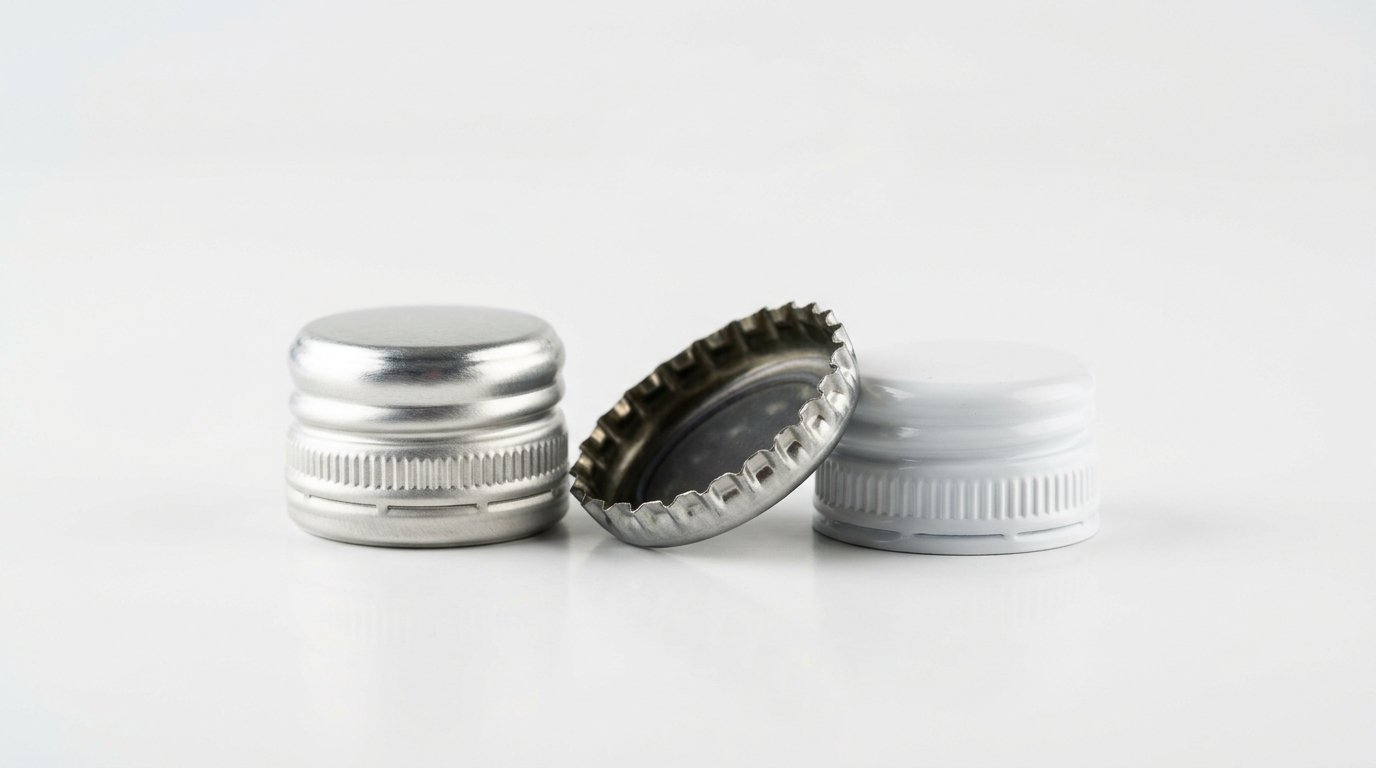
A closure in packaging is any device that seals the opening of a container, keeping the contents in and contaminants out. It is the umbrella term for caps, lids, corks, stoppers and seals, so every cap is a closure but not every closure is a cap. Bottle closures fall into eight main families, from aluminium roll-on caps to crimped vial seals, and the family is chosen by the container’s neck, the pressure inside and whether the pack has to reseal or show first opening.
Closure vs cap vs lid
These words overlap in everyday use, but they separate cleanly. Closure is the category; cap and lid are two kinds of closure named by the opening they cover.
| Term | Typical use | Relationship |
|---|---|---|
| Closure | Any sealing device on any container | The umbrella category |
| Cap | Narrow-neck bottles | A type of closure |
| Lid | Wide-mouth jars, tubs and cans | A type of closure |
| Stopper or cork | Pushed into the neck rather than over it | A type of closure |
In short, all caps, lids and stoppers are closures, but “closure” is the word a packaging buyer uses when the format has not been decided yet.
The main closure families
Eight families cover almost every bottle and jar sold in India. Each row names the material, how the closure goes on, what it is used for and whether it reseals or shows tampering, with the page that covers it in full.
| Family | Material | How it goes on | Main applications | Tamper evidence | Reseals | Covered in full |
|---|---|---|---|---|---|---|
| Aluminium ROPP caps | Aluminium shell with a liner | Thread rolled onto the neck at capping | Packaged water, carbonated drinks, juices, spirits, syrups | Yes, a ring that breaks on first opening | Yes | What is a ROPP cap |
| Plastic screw caps | Polypropylene or HDPE | Pre-moulded thread, turned down by a torque capper | PET water and soft drinks, juices, sauces | Yes, a break-off band | Yes | ROPP cap vs screw cap |
| Crown caps | Tinplate or tin-free steel | Crimped round the bead of a glass bottle | Beer, glass soft drinks, soda water | Bent on removal | No | Crown cap vs ROPP cap |
| Dispensing, sports and flip-top caps | Polypropylene, often with a valve | Screwed or snapped on | Sports water, sauces, edible oil, personal care | Only with an added seal or band | Yes | Types of water bottle caps |
| Snap-on and press-on lids | LDPE or polypropylene | Pushed over a bead | Dairy, fresh juice, tubs | Only with a foil membrane or pull tab | Usually | Types of bottle caps |
| Lug and vacuum caps | Tinplate with a sealing compound | Lugs engage a jar thread, vacuum holds the lid | Jams, pickles, honey | Yes, a vacuum button that pops | Yes | Types of bottle caps |
| Corks and stoppers | Natural or synthetic cork, glass, rubber | Pushed into the neck | Wine, some spirits, laboratory bottles | Only with a capsule or sleeve over it | Yes | Types of bottle caps |
| Crimped vial seals | Aluminium, often with a plastic flip-off button | Crimped over a rubber stopper | Injection vials in pharma | Yes, the button or tear strip | No | PP cap vs ROPP cap |
Two variants run across several families rather than forming one of their own. A tethered cap stays attached to the bottle after opening, and an induction seal is a foil membrane bonded across the mouth under almost any screw closure. Both are additions to a family, not a replacement for one.
The right family depends on the neck finish, the pressure inside, and whether the pack needs tamper evidence or resealing. For the fuller tour with a row per cap type, see types of bottle caps.
The jobs a closure does
A closure is doing more work than it looks. A good one handles several jobs at once, and the family decides which of them it can do.
- Sealing: the core job, keeping liquid or product in and air, moisture and contaminants out. The seal is usually formed by a liner inside the closure pressing against the container rim. For that layer, see what is a cap liner.
- Tamper evidence: showing a clear, irreversible sign if the pack has been opened, so a buyer can trust it is intact. On a metal closure that job falls to the pilfer-proof band.
- Resealability: letting the consumer close the pack again after first use, which matters for beverages and anything used over several sittings.
- Holding pressure or vacuum: a carbonated drink pushes outward on the closure, and a hot-filled juice pulls inward as it cools.
- Dispensing and protection: controlling how the product comes out and protecting it through transport and storage.
The pressure and vacuum job is where families part company. A hot-filled juice loads the closure twice, once at fill temperature and again as the cooling headspace pulls a partial vacuum, which is worked through in closures for juices and RTD beverages. A closure that seals but gives no tamper signal, or one that cannot reseal a drink, is doing only part of the job for a beverage.
Closures for water and beverages
Packaged drinking water and beverages need a seal that holds pressure, clear tamper evidence and, often, resealing. That narrows the eight families to two for most Indian bottles: the aluminium ROPP cap and the plastic screw cap. Aluminium ROPP closures are common on premium water and glass because the metal shell is formed tightly to the bottle thread and a break ring shows first opening. The parts of a ROPP cap breaks that closure into its components.
Closure size follows the pack format rather than the brand. Retail bottles, 5 litre cans and 20 litre jars each take a different closure, and one plant filling all three runs three closure formats, as laid out in water bottle cap sizes in India.
R Vision makes two closures in the ROPP family, both 28/15 mm aluminium with a TPE liner and rated to 8 bar. The Aqua Cap is for packaged drinking water and uses a three-part break-system tamper ring, and suits hot fill, cold fill and carbonated products. The Bev Cap is for beverages, uses a PVC-free TPE liner, and keeps its pilfer-proof ring attached after opening so the bottle reseals. See Aqua Cap and Bev Cap.
How to choose a closure
Work through four questions, in this order, and most of the decision is made.
| Question | Why it comes first | What it rules out |
|---|---|---|
| What is the container neck? | The closure is matched to the finish, not the other way round | Any family that does not fit that finish |
| Is the fill still, hot, cold or carbonated? | Pressure and vacuum decide how strong the seal has to be | Closures not rated for the load |
| Does the pack need tamper evidence, resealing or both? | Beverages usually need both | Crown caps if resealing is needed; plain lids if evidence is |
| Which rules apply? | Food and drink in India need food-grade contact materials under FSSAI | Any liner or material without food-contact evidence |
Matching those four answers to a family is most of the decision. For sizing, see the ROPP cap size chart and how to measure bottle cap size.
Frequently asked questions
What is a closure in packaging?
A closure is any device that seals the opening of a container to keep the contents in and contaminants out. It is the umbrella term covering caps, lids, corks, stoppers and seals, so every cap and lid is a closure, but closure is the broader category.
Is a cap the same as a closure?
Not exactly. A cap is a type of closure, usually one that screws, rolls or presses onto a narrow bottle neck. Closure is the general term, so all caps are closures but not every closure is called a cap; a lid on a jar and a cork in a wine bottle are closures too.
What are the main types of bottle closures?
The main families are aluminium ROPP caps, plastic screw caps, crown caps, dispensing and flip-top caps, snap-on lids, lug and vacuum caps for jars, corks and stoppers, and crimped seals for pharma vials. The right one depends on the container, the contents, and whether tamper evidence or resealing is needed.
What does a closure actually do?
A closure seals the container to keep the product in and contaminants out. A good one also shows tamper evidence, allows resealing, holds pressure or vacuum where the fill creates it, and protects the product through transport and storage. The seal itself is usually formed by a liner pressing against the container rim.
Which closure is best for packaged water?
For most packaged drinking water in India the choice is between an aluminium ROPP closure and a plastic screw cap. Aluminium ROPP suits premium and glass-bottled water, because the shell forms tightly to the bottle thread and a break ring shows first opening. R Vision’s Aqua Cap is built for this, with a three-part break-system ring and a TPE liner, rated to 8 bar.
More closure explainers are indexed in the learn library. To pick the right closure for your product, browse R Vision’s products or contact R Vision.