
 Sankalp
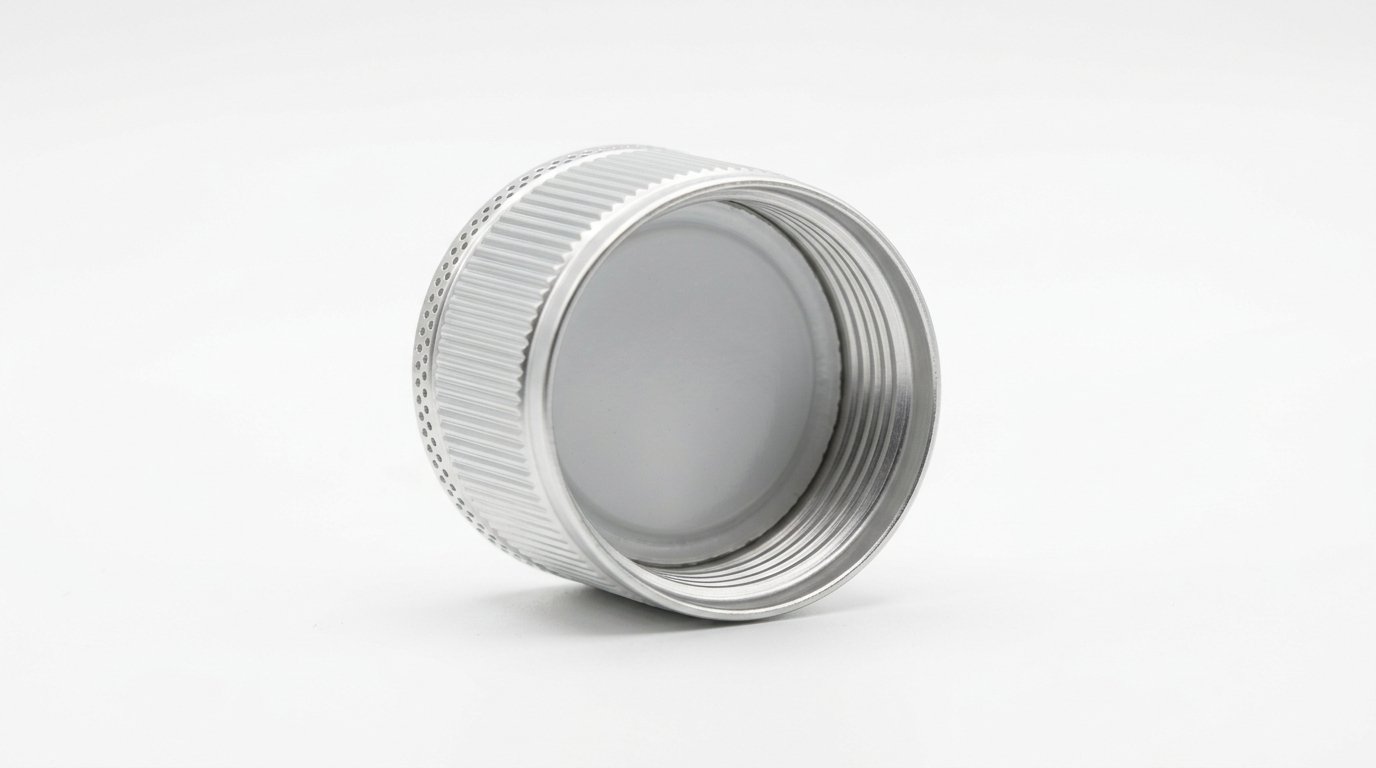
A cap liner, also called a wad, is the soft layer fixed inside the top of a bottle cap that forms the actual seal. When the cap is applied, the liner is pressed against the rim of the bottle neck and closes the gap that would otherwise let liquid, gas or air pass. The shell holds the cap together; the liner does the sealing. Liners are made from a handful of materials, mainly EPE foam, solid PE, PVC compound, pulp and poly, and TPE, and the material is chosen to suit the product.
What the liner does, in two sentences
The liner is compressed between the cap and the bottle rim, takes the shape of the rim, and seals across the small irregularities in glass or PET. It is also the only part of most closures that touches the product, so its material decides both whether the pack seals and whether anything moves from the closure into what is inside.
Where the liner sits
Every sealing closure has two working layers. The outer part is the shell: the aluminium body of a ROPP cap or the moulded plastic of a screw cap, which gives the closure its shape, threads and printable surface. Inside the crown of that shell sits the liner, either a disc placed into the top panel or a compound moulded into it.
When the bottle is capped, the neck rim is pushed up against the liner. The liner compresses slightly and conforms, and that compression is what keeps the contents in and contaminants out. On a roll-on closure, the impression the rim leaves in the liner is also the first thing to check when a pack leaks, because it shows whether the liner was compressed evenly.
What the liner actually does
The liner is the single most important sealing component in the closure. Its jobs are:
- Close the gap between the cap and the bottle rim so nothing leaks.
- Hold internal pressure in carbonated and pressurised products.
- Keep oxygen and moisture out, protecting taste and shelf life.
- Stay food-safe and inert, so it does not taint the contents.
If the shell is perfect but the liner is wrong for the product, the closure will still leak, lose fizz or spoil the contents. This is why the liner is specified as carefully as the cap itself. A liner that is poorly seated rather than poorly chosen produces the same symptom on the line, which is why common ROPP capping defects separates cap causes from machine causes.
Liner versus shell
It is easy to confuse the two, so it helps to separate them clearly.
| Feature | Shell (cap body) | Liner (wad) |
|---|---|---|
| What it is | Outer aluminium or plastic body | Soft disc or compound inside the crown |
| Main job | Structure, threads, tamper band, branding | Forms the actual seal |
| Material | Aluminium (ROPP) or moulded plastic | EPE, PE, PVC compound, pulp and poly, or TPE |
| Contact with product | Usually none | Direct contact with the bottle rim and headspace |
| Fails if wrong | Cap will not fit or hold | Product leaks, goes flat or spoils |
The main liner materials, one line each
Each material family has a job it does well. The table gives one line per material; the full comparison, with composition, thickness, temperature range, food-contact position and cost order, is in EPE, PE, PVC and pulp liners compared.
| Material | What it is | What it is used for |
|---|---|---|
| EPE (expanded polyethylene) | Compressible polyethylene foam, sometimes with solid PE skins | Still, cold-filled liquids and rims that are not perfectly flat |
| Solid PE | Unfoamed polyethylene disc, film or cone | Moisture-sensitive or evaporation-prone contents on a smooth rim |
| PVC compound | Plasticised PVC flowed into a metal cap or used as a facing | Metal closures, hot fill and pressure, where PVC is still accepted |
| Pulp and poly | Paper board backing with a thin plastic facing | Dry goods, powders and mild cold-filled liquids |
| TPE (thermoplastic elastomer) | PVC-free elastic compound moulded into the shell | Water and beverages, hot fill, cold fill and carbonated products |
| Linerless | No liner; the seal is moulded into a plastic cap | PET water and soft drink closures, many chemical containers |
Thickness follows the type: foam liners are sold as discs of around half a millimetre to a millimetre and a half, while compound liners in metal closures are specified by the closure maker. How the families match to fill types is covered in bottle cap liner materials.
The right choice depends on the contents. Still water, carbonated soft drinks, edible oils and hot-filled juices each place different demands on the seal, so the liner is matched to the product, not picked at random. Where PVC is still in use, PVC vs PVC-free cap liners sets out why brands are switching, and food-grade aluminium and liner standards covers the migration limits a liner is tested against in India.
Why the liner matters for water and beverages
For packaged drinking water and carbonated drinks, the liner carries the whole burden of keeping the product safe and stable on the shelf. A carbonated drink pushes outward with real pressure, so the liner has to hold that pressure without weeping or letting gas escape; that limit is what a closure’s 8 bar pressure rating describes. A water bottle has to stay sealed and untainted for months. In both cases a food-safe, correctly matched liner is what makes the closure trustworthy.
This rules out several families for these products. Foam and pulp liners are cold-fill materials not built to hold pressure, and a linerless design is only possible on a moulded plastic cap. An aluminium roll-on closure for drinks therefore uses a moulded compound liner, which leaves the choice between PVC and a PVC-free compound such as TPE.
Which liner goes into R Vision’s closures, and why PVC-free
R Vision uses a TPE liner in both of its aluminium ROPP closures. The Aqua Cap for packaged drinking water carries a TPE liner under a three-part break-system ring, and the Bev Cap carries a PVC-free TPE liner under a ring that stays attached so the bottle reseals. Both are 28/15 mm, rated to 8 bar, and suit hot fill, cold fill and carbonated products.
| Closure | Built for | Liner | Pressure rating |
|---|---|---|---|
| Aqua Cap | Packaged drinking water | TPE | 8 bar |
| Bev Cap | Carbonated soft drinks, juices and other beverages | TPE, PVC-free | 8 bar |
The reason for TPE is the plasticiser question. A PVC compound seals well, but it has to be softened with plasticisers that can migrate into the product over shelf life. TPE is elastic as supplied, so it seals against the rim, holds pressure and survives a hot fill without that additive package. No PVC-lined version of either closure is offered. PVC-free liners for beverages explains what that choice means for a drinks brand.
Frequently asked questions
What is a cap liner made of?
A cap liner is made from a soft sealing material: expanded polyethylene foam (EPE), solid polyethylene, a PVC compound, a pulp board with a plastic facing, or a thermoplastic elastomer (TPE). The material is chosen to suit the product. Water and beverage closures increasingly use PVC-free compounds such as TPE, because they seal reliably under pressure and hot fill without plasticisers.
Is the liner the same as the cap?
No. The cap is the whole closure, including the outer shell that carries the threads, tamper band and branding. The liner is only the soft layer inside the crown of that cap. The shell holds everything together, but the liner is the part that actually seals against the bottle rim.
Do all bottle caps have a liner?
No. Most sealing caps have one, either a disc placed in the crown or a compound moulded into it. Linerless plastic caps instead have a seal moulded into the cap itself, which is common on PET water and soft drink bottles. Aluminium roll-on caps always carry a liner, because the metal has no sealing features of its own.
Why does the liner material matter?
Because the liner is in direct contact with the product and does the actual sealing. The wrong material can taint the contents, fail to hold pressure in a carbonated drink, or break down under a hot fill. Matching the liner to the product keeps the seal reliable and the contents safe over the shelf life.
What is the purpose of a plastic liner in a bottle cap?
A plastic liner seals the gap between the cap and the rim of the bottle. It is softer than the shell, so it compresses and follows the shape of the rim, closing small irregularities that would otherwise leak. It also separates the product from the shell and, in pressure-rated closures, holds carbonation in.
More closure guides are indexed on the learn page. To see how the liner fits alongside the other components, read parts of a ROPP cap and what is a ROPP cap.