
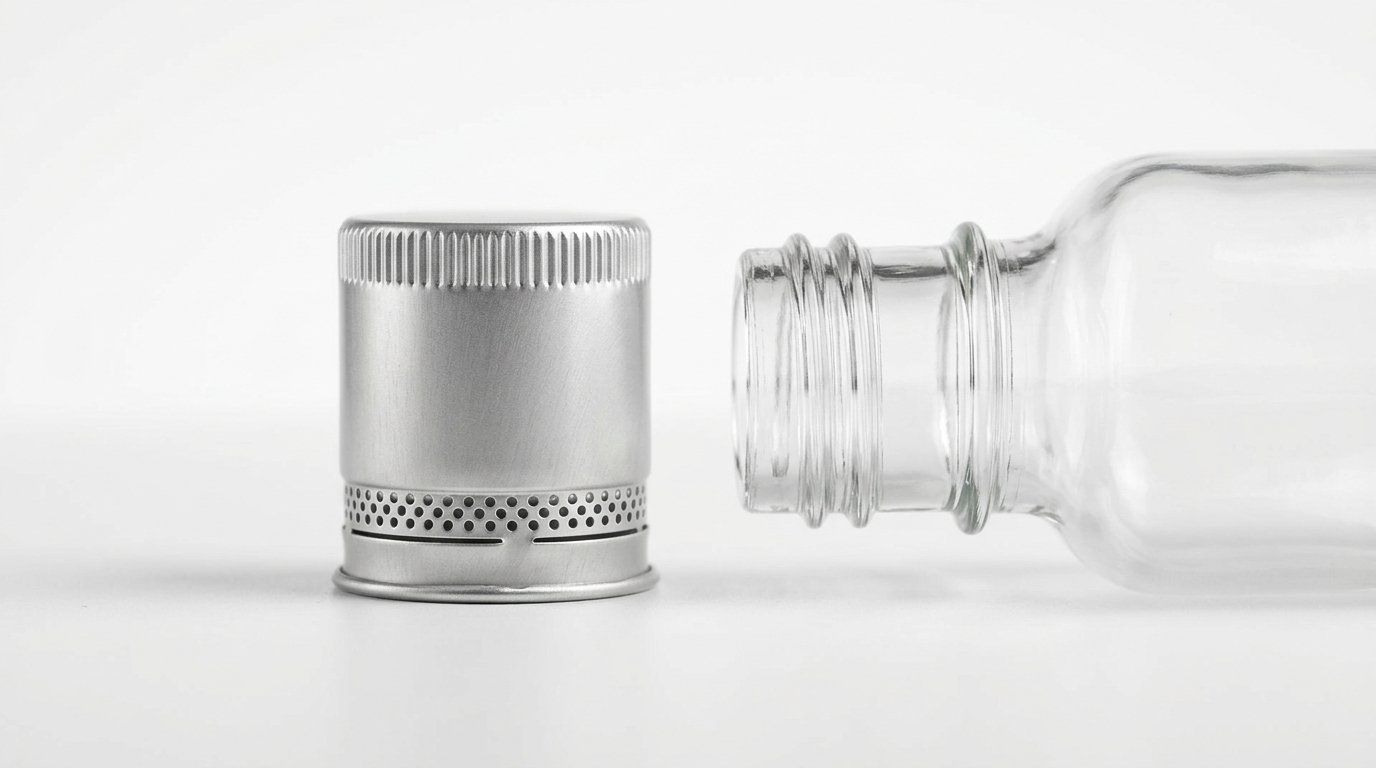
 Sankalp
To measure a bottle cap size, measure the outer diameter of the bottle neck across the threads with a caliper, then measure the neck height where the cap skirt will sit. The two figures give a size written as diameter by height in millimetres, for example 28/15 mm. The diameter must match the bottle’s neck finish; the height follows the neck length and seal you need.
What a bottle cap size actually describes
An aluminium ROPP cap size is written as two numbers, diameter by height, both in millimetres:
- Diameter: the outer diameter of the cap shell, set by the bottle’s neck finish.
- Height: the skirt length that runs down the neck, set by the neck length and the position of the tamper band.
So 28/15 mm means a 28mm diameter shell with a 15mm skirt height, the volume size for water and soft drinks in India; see 28mm ROPP caps. The diameter is the figure that must match; the height then follows the bottle. Get the diameter wrong and the cap will not seal at all, so it is the number to fix first.
What you need to measure
You can get a close reading with simple tools:
- A vernier caliper (digital or manual).
- A clean, empty sample bottle.
- The bottle’s neck-finish drawing or standard reference, if you have one.
A caliper reading puts you in the right size band. It is a starting point, not a final specification, because thread profile, rim thickness, and glass or PET tolerances all affect the final fit.
Step by step
1. Measure the neck diameter
Place the caliper across the outside of the neck at the point where the cap will seal, measuring across the threads. Read the figure in millimetres. This is the diameter you must match, so a reading close to 28mm points you to a 28mm cap.
2. Measure the neck height
Measure from the top rim of the neck down to where you want the cap skirt to end, again in millimetres. This gives the approximate height. Water and soft-drink bottles usually take a shorter skirt; spirits bottles often take a taller one for a fuller pilfer-proof band.
3. Note the neck finish
If the bottle’s neck finish is stamped or documented, record it, along with any drawing number from the bottle supplier. The neck finish is the shaped, threaded top of the bottle, and it is the true reference for the cap size. Codes such as 38-400 are decoded in neck finish codes and cap sizes.
4. Write the size as diameter by height
Combine the two readings into the standard format, for example 28/15 mm. State this when you talk to a closure supplier so there is no ambiguity.
What 28/15 mm means
The size 28/15 mm is a common specification for packaged drinking water and beverage closures in India. It describes a 28mm diameter shell with a 15mm skirt height:
| Figure | Meaning | Set by |
|---|---|---|
| 28 mm | Outer diameter of the cap shell | The bottle’s neck finish |
| 15 mm | Skirt height down the neck | Neck length and tamper-band position |
Because two bottles quoted at the same nominal 28mm can still have slightly different neck finishes, a matching diameter does not guarantee a fit on its own. The neck finish is the deciding factor.
Matching the cap to the bottle finish
The neck finish, its diameter, thread profile, thread pitch, rim, and height, is what drives the size. A ROPP shell is formed onto that finish during capping, so the finish, not the cap, sets the fit. What ROPP capping involves describes that forming step, and what a ROPP cap is the closure itself. Two rules follow:
- Match the diameter to the neck finish, not to a nominal label. A 28mm reading needs a 28mm shell; a 30mm shell will not seal on it. What that wider finish is used for is covered in 30mm ROPP caps.
- Verify with a physical sample. Send the closure supplier a sample bottle wherever possible. A sample removes the ambiguity a drawing alone can leave, and approving samples before a full run is the most reliable way to avoid leakers and poor thread pickup.
Frequently asked questions
How do I measure a bottle cap size at home?
Use a vernier caliper on a clean, empty bottle. Measure the outer diameter of the neck across the threads to get the diameter figure, then measure from the top rim down to where the cap skirt should end for the height. Write the result as diameter by height in millimetres, such as 28/15 mm, and confirm it with a sample before ordering.
What does 28/15 mm mean on a bottle cap?
It means a cap with a 28mm outer diameter and a 15mm skirt height. The 28mm diameter must match the bottle’s neck finish, and the 15mm height is how far the skirt runs down the neck. This size is common for packaged drinking water and beverage closures in India.
Should I measure the bottle or the cap?
Measure the bottle’s neck finish. The neck finish drives the size, because a ROPP shell is formed onto it during capping. If you only have an existing cap, you can measure its outer diameter and skirt height as a guide, but the safest reference is always the bottle neck the cap has to seal on.
Are two caps of the same diameter interchangeable?
Not always. Two bottles quoted at the same nominal diameter can still have slightly different neck finishes, thread profiles, and tolerances depending on the bottle maker. A matching diameter is necessary but not sufficient. Check a closure against your specific bottle before committing to a production quantity.
For standard sizes and typical applications, see the ROPP cap size chart, or contact us with a sample bottle to confirm your size. R Vision’s Aqua Cap and Bev Cap are both 28/15 mm, and more sizing guides sit in the learn library.