
 R Vision Technical Team
A pilfer-proof cap is a bottle closure with a lower band that breaks away from the cap the first time the bottle is opened and cannot be put back. The band is the proof: if it is intact, the bottle has not been opened since it was capped. The most common pilfer-proof format in India is the aluminium ROPP (roll-on pilfer-proof) cap, used on packaged drinking water, soft drinks, spirits and pharma syrups.
How the pilfer band works
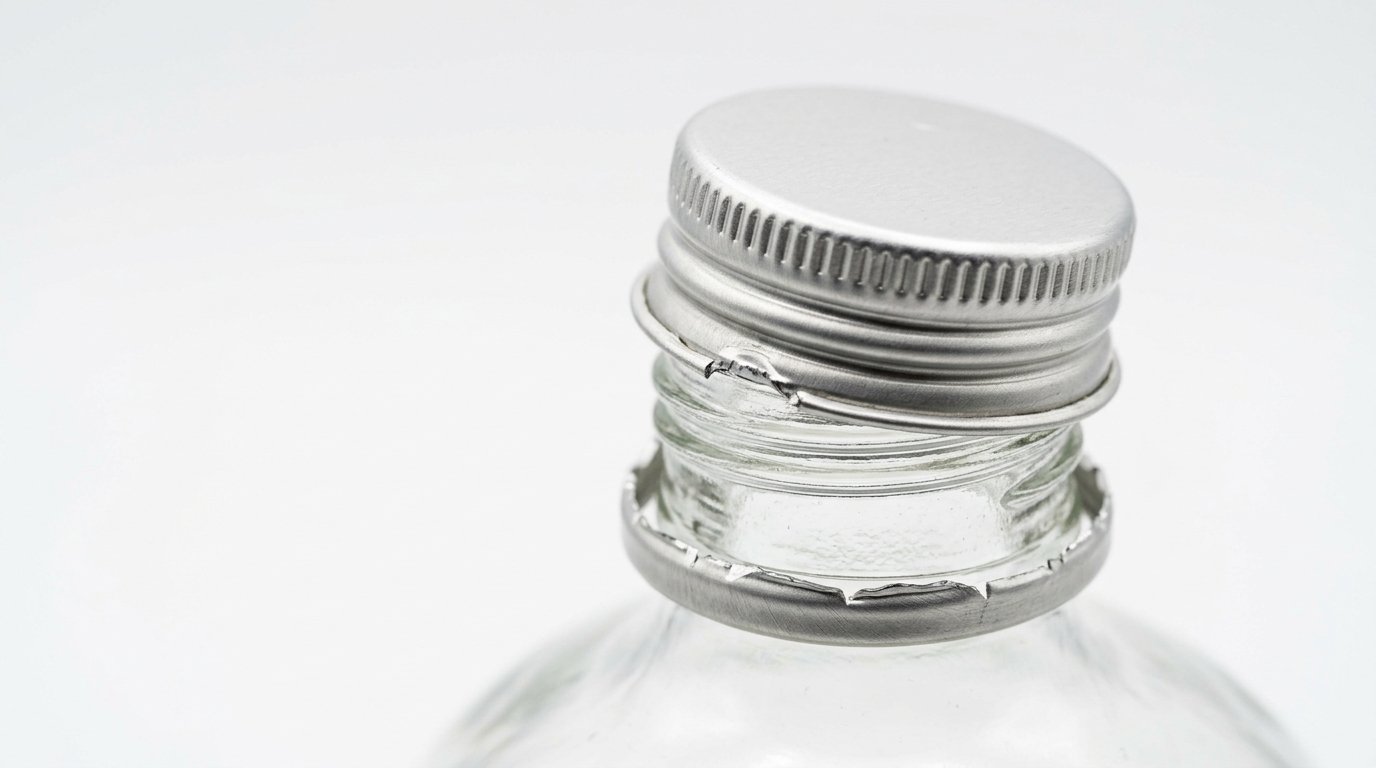
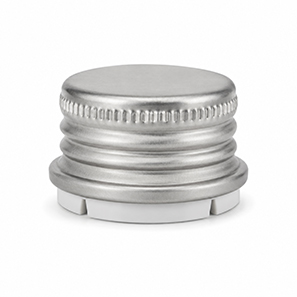
The pilfer band, also called the pilfer ring or tamper band, is the ring at the bottom of the cap. It is joined to the body of the cap by thin bridges. During capping the band is tucked under the bead that runs round the bottle neck below the thread, the locking ring, and once tucked it cannot ride back up. Where it sits relative to the shell, liner and knurls is shown in the parts of a ROPP cap.
When the cap is turned for the first time, the cap body climbs the thread while the bead holds the band down. The bridges take the strain and snap. After that the band either drops against the bottle shoulder or stays on the neck, depending on the design, and it cannot be joined back to the cap.
| Stage | What the band does | What a buyer sees |
|---|---|---|
| Capped | Joined to the cap, tucked under the neck bead | A continuous ring: the bottle is sealed |
| First turn | Held down by the bead while the cap rises | Nothing yet |
| Opened | Bridges snap; the band separates | A gap or a dropped ring: the bottle has been opened |
| Re-closed | Stays broken | The cap may be back on, but the band shows the opening |
The break goes one way. A pilfer-proof cap does not stop a determined person from opening the bottle. It makes the opening impossible to hide.
Why ROPP is the classic pilfer-proof format
ROPP stands for roll-on pilfer-proof, so the name carries the promise. A ROPP cap starts as a plain aluminium shell with no thread, scored in the factory as described in how ROPP caps are made. At the capping line, rollers press the aluminium against the glass or PET neck, forming the thread and tucking the band under the locking ring in the same step. Because both are formed on the bottle itself, the fit is exact to that neck. The full mechanism is in what is a ROPP cap.
Pilfer-proof formats compared
ROPP is one way to make a cap pilfer-proof. Moulded plastic caps carry a break-off band of their own, and some aluminium designs keep the band on the bottle so the cap reseals.
| Format | Band | After opening | Typical use |
|---|---|---|---|
| Aluminium ROPP cap, drop band | Part of the closure, held by bridges or sections | Band drops loose round the neck | Packaged drinking water, spirits, pharma syrups |
| Aluminium ROPP cap, retained band | Held to the cap or neck after the break | Band stays with the cap or neck; the cap reseals | Soft drinks, juices, beverages drunk over more than one sitting |
| Moulded plastic screw cap with break-off band | Moulded with the cap, joined by plastic bridges | Band drops or stays on the neck; tethered designs keep the cap attached | Standard PET water and soft drinks |
| Plain screw cap | None | No evidence of opening | General closures where tamper evidence is not needed |
How a ROPP cap differs from a moulded screw cap on the line and on the shelf is set out in ROPP cap vs screw cap, and the wider family of tamper-evidence methods, including seals and sleeves, in what is a tamper-evident cap. Every ROPP cap is both pilfer-proof and tamper-evident; not every tamper-evident pack uses a pilfer band.
Where pilfer-proof caps matter most
Pilfer-proof caps matter wherever the contents can be diluted, refilled or counterfeited and the buyer has no other way to check. Packaged drinking water is the clearest case: water is bought sealed and looks the same whether or not it has been refilled, so an unbroken band is the buyer’s only proof. Spirits and medicines use the band for the same reason. In India, packaged drinking water is made to IS 14543 and sold under an FSSAI licence, and both expect a securely sealed pack.
Pilfer-proof caps from R Vision Closures
R Vision Closures makes two pilfer-proof aluminium ROPP caps, both 28/15 mm with a TPE liner, rated to 8 bar and adhering to USFDA and EU standards.
| Closure | Pilfer band | Made for |
|---|---|---|
| Aqua Cap | Three-part break-system PE ring that parts visibly on first opening | Packaged drinking water |
| Bev Cap | PE ring that breaks on opening and stays with the cap or the neck, in Round Ring, Two Slit or Five Slit; PVC-free liner | Soft drinks, juices and other beverages |
Both are made for the MCA I/II/III, MCA 7.5 R, MCA 7.5 RF, PET and BPF neck finishes and run on standard roll-on application machinery. Minimum orders start at 50,000 caps in plain silver, 200,000 in plain colours and 300,000 litho printed, with a lead time of 4 to 6 weeks. The size itself is covered in 28mm ROPP caps, both closures together on ROPP caps, and how each shows first opening on the tamper-evident caps page.
Frequently asked questions
How does a pilfer-proof cap work?
The cap has a lower band joined to it by thin bridges and tucked under the bead on the bottle neck during capping. When the cap is first turned, the bead holds the band while the cap rises, the bridges snap and the band separates. It cannot be rejoined, so the bottle shows it has been opened.
Is a pilfer-proof cap the same as a ROPP cap?
ROPP stands for roll-on pilfer-proof, so every ROPP cap is pilfer-proof. Moulded plastic caps with a break-off band are pilfer-proof too, so not every pilfer-proof cap is a ROPP cap. In India, the aluminium ROPP cap is the most common pilfer-proof format on water and spirits.
Can a pilfer-proof cap be resealed after opening?
The band cannot be resealed once it has snapped. On designs such as R Vision’s Bev Cap, the broken band stays with the cap or the neck and the cap screws back down, so the bottle reseals while still showing it was opened.
Why do water bottles use pilfer-proof caps?
Water is easy to open and refill without a visible mark, and it looks the same either way. An unbroken pilfer band shows the bottle has not been opened since it left the plant, which is the proof a buyer needs and the securely sealed pack Indian rules expect.
What size pilfer-proof cap fits a water bottle?
Most Indian water bottles from 250 ml to 2 litres sit on a 28 mm neck, and the aluminium pilfer-proof cap made for them is 28/15 mm: a 28 mm shell with a 15 mm skirt. Confirm the finish on your bottle drawing before ordering, because two 28 mm necks can be cut to different finishes.
For what the word itself means, see pilfer meaning in packaging, and for the terms it is often confused with, tamper evident vs tamper proof. To match a pilfer-proof cap to your bottle, send a sample through contact us. More closure guides are collected on Learn.