
 Sankalp
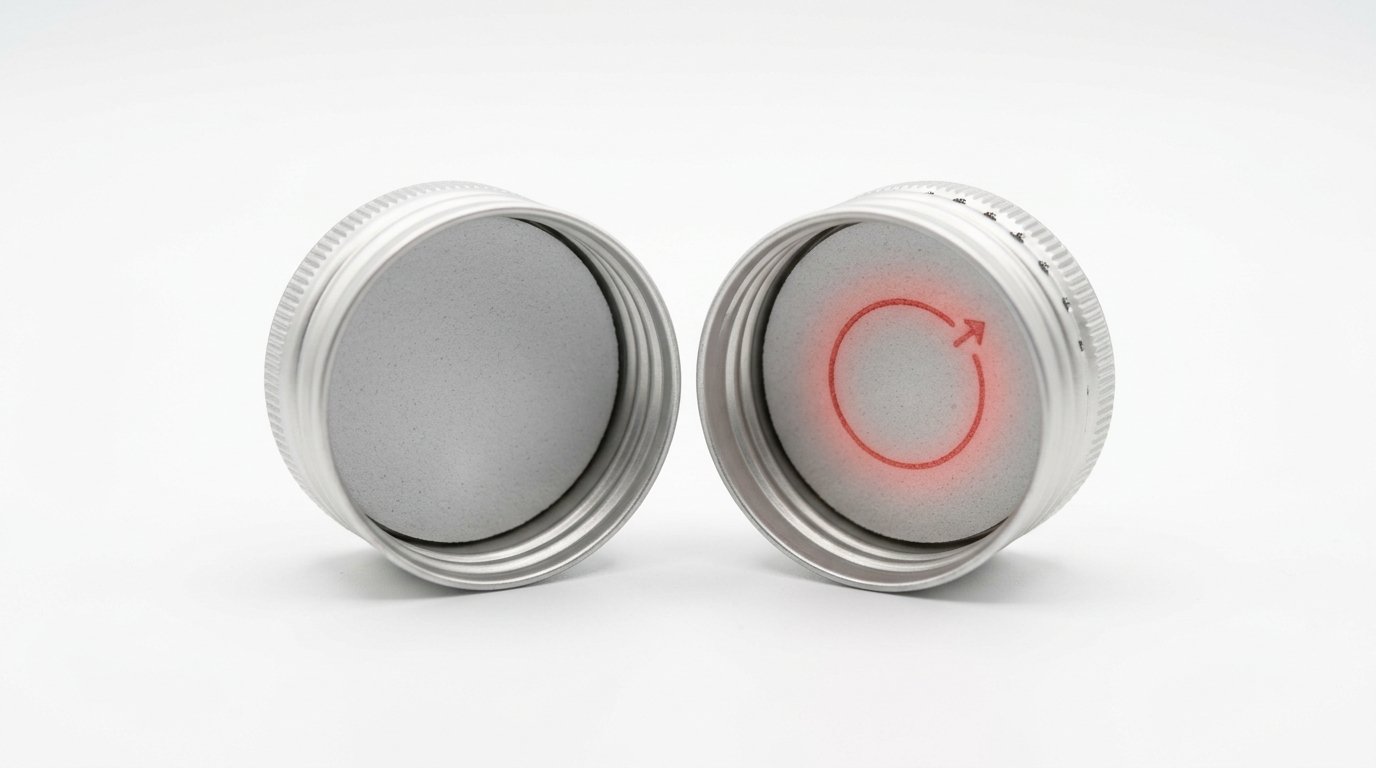
The liner is the disc inside a cap that presses against the bottle rim and forms the actual seal. A PVC liner is the older, low-cost standard but relies on plasticisers that can migrate into the product. A PVC-free liner, typically a TPE (thermoplastic elastomer), seals just as well without those plasticisers, which is why beverage and water brands are moving to it. For a food-contact closure, PVC-free is the safer default.
Why the liner matters
A cap has two jobs: hold onto the bottle and seal it. The shell and threads do the holding; the liner does the sealing. When the cap is applied, the liner is compressed against the bottle rim and conforms to it, closing the gap that would otherwise let the product leak or lose pressure. Because the liner sits in direct contact with the product, its material is a food-safety question, not just an engineering one. What a cap liner is explains the component in full. The role of the liner is covered alongside the other components in Parts of a ROPP cap.
PVC liners
PVC (polyvinyl chloride) liners have long been used because they are cheap and seal reliably. The concern is that PVC on its own is rigid, so it is softened with plasticisers, and those plasticisers can migrate into the product over time, especially with fatty or oily contents and long shelf lives. Regulators and brands have grown wary of that migration, which has pushed the industry toward alternatives for food and beverage use.
PVC-free liners
PVC-free liners are made from materials such as TPE that seal well without the plasticisers PVC needs. They give a clean, food-safe contact surface, handle a range of fill temperatures, and avoid the migration concern entirely. For packaged water and beverages, where the product is consumed directly and shelf lives can be long, a PVC-free liner removes a whole category of risk. The families in use, TPE, PE foam and EPE, are compared in bottle cap liner materials.
Side-by-side comparison
| Factor | PVC liner | PVC-free liner (TPE) |
|---|---|---|
| Sealing performance | Reliable | Reliable |
| Plasticiser migration | Possible, a concern for food contact | None of that concern |
| Food-contact suitability | Increasingly avoided | Preferred |
| Fill compatibility | General | Handles hot, cold, carbonated |
| Cost | Lower | Slightly higher |
| Direction of the market | Being phased out | The default for new launches |
What R Vision uses
R Vision’s Bev Cap uses a PVC-free TPE liner, so the sealing surface in contact with the drink carries none of the plasticiser-migration concern that PVC raises. The Aqua Cap for packaged drinking water also uses a TPE liner. Both closures adhere to USFDA and EU standards and are rated to 8 bar, covering hot fill, cold fill, and carbonated products.
Which to choose
For any food or beverage bottle, choose a PVC-free liner. It seals as well as PVC, removes the migration question, and is where the market is heading, so it protects you against tightening food-contact expectations in India and export markets alike. PVC liners survive mainly in non-food or legacy applications where cost is the only driver. For a beverage line specifically, see PVC-free liners for beverages.
Frequently asked questions
What does a cap liner do?
The liner is the disc inside the cap that compresses against the bottle rim and forms the actual seal. Without a good liner, the cap holds on but does not seal properly.
Is a PVC-free liner safe for drinking water?
Yes. PVC-free liners such as TPE give a food-safe sealing surface with no plasticiser migration, which is why they are used for packaged drinking water. R Vision’s water and beverage closures use a TPE liner.
Why are brands moving away from PVC liners?
PVC needs plasticisers to stay flexible, and those can migrate into the product over time. For food and beverage contact, brands and regulators increasingly prefer PVC-free materials that avoid that risk.
Does a PVC-free liner seal as well as PVC?
Yes. TPE liners seal reliably across hot, cold, and carbonated fills, so switching to PVC-free does not cost you sealing performance.
The Bev Cap product page lists the liner specification, and more closure guides are indexed on the learn page. To choose a PVC-free closure for your line, see the Bev Cap page or contact R Vision.