
 Sankalp
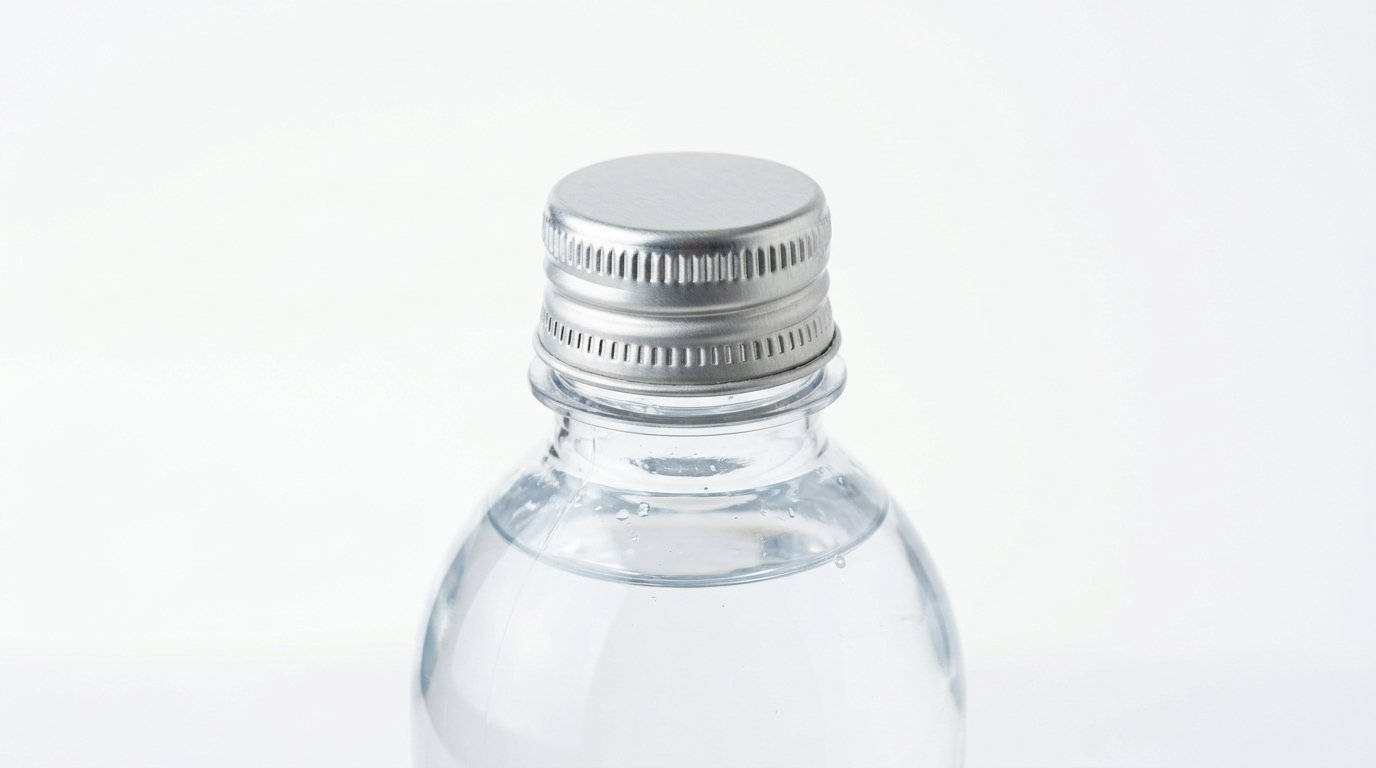
A packaged drinking water closure has to match the bottle’s neck finish, seal with a food-grade liner and show at a glance whether the bottle has been opened. Most Indian PET water bottles from 250 ml to 2 litres sit in the 28 to 30 mm neck family, and whether that neck takes a moulded plastic cap or an aluminium roll-on cap depends on the finish it was cut to, while the water itself is judged against IS 14543. R Vision’s Aqua Cap is a 28/15 mm aluminium ROPP closure with a TPE liner, a three-part break-system ring and an 8 bar rating.
What a water bottler needs from a closure
A water closure is judged on five things, and a bottler should settle them in this order, because the first decides which of the rest are possible. If you are still comparing formats, types of water bottle caps sets aluminium ROPP, plastic screw, sports and jar closures side by side, and which water bottle cap is best works through the trade-offs segment by segment.
- The right neck fit. The closure has to match the bottle finish so the seal forms cleanly on the line. The ROPP cap size chart lists the common diameters and heights.
- A reliable seal. The cap has to keep the water sealed through filling, transport, storage and handling. When it does not, the cause is usually the head, the rim or the cap, which why water bottle caps leak separates.
- A food-safe, taste-neutral liner. The liner is what touches the water, so it must be food safe and must not carry odour or flavour.
- Visible tamper evidence. A buyer needs to see that the bottle has not been opened. A tamper-evident closure whose pilfer band breaks cleanly on the first turn gives that proof.
- Shelf appeal. For premium and niche labels, a metallic closure separates the bottle from rows of standard plastic caps, and the colour a brand puts on that cap is a branding decision rather than a regulated code.
Neck formats on Indian water bottles, and the closure each takes
The neck decides the closure before anything else does. PET still water commonly runs on a 28 mm neck or on the lightweight three-start 29/25 and 30/25 finishes, all of which carry a moulded thread for a plastic screw cap. An aluminium ROPP closure needs a roll-on finish: the 28 mm MCA family on glass, or a PET finish drawn for a roll-on cap.
| Pack | Typical neck format | Closure that fits | Aluminium ROPP? |
|---|---|---|---|
| 200 ml and 300 ml cup | No neck; film lid heat sealed to the cup | Sealing film | No |
| 250 ml to 2 litre still PET | 28 mm neck, or 29/25 and 30/25H three-start finishes | Moulded plastic screw cap | Only if the preform carries a roll-on finish |
| Sparkling and carbonated PET | PCO 1810, PCO 1881, or 26/22 | Moulded pressure-rated plastic closure | No |
| PET with a roll-on finish | PET BPF | Aluminium ROPP, 28/15 mm | Yes, Aqua Cap |
| Glass water bottle, hotels and premium retail | 28 mm MCA finishes | Aluminium ROPP, 28/15 mm | Yes, Aqua Cap |
| 5 litre can | Around 38 mm | Moulded jar cap | No |
| 20 litre returnable jar | Around 55 mm | Moulded push or screw jar cap | No |
The PET finishes are published by CETIE as GME data sheets and by ISBT as Threadspecs. The survey behind this table, with the data sheet for each finish, is in neck formats on Indian packaged water bottles, and pack-by-pack cap sizes from the cup to the 20 litre jar are in water bottle cap sizes used in India. For glass, glass bottle neck finishes for ROPP caps maps the MCA finishes, and neck finish standards on Indian glass bottles covers IS 7511, the Indian standard for glass neck geometry.
Two bottles quoted at a nominal 28 mm can be cut to different drawings, so send the preform or glass drawing reference to a closure supplier rather than a diameter.
The tamper-evidence requirement
IS 14543 expects packaged drinking water to be packed in clean, food-grade containers and sealed so the product is protected. On a bottle, the closure is what delivers that seal, and the tamper band is how anyone in the trade can see the seal is intact without opening the pack. That is why tamper evidence is treated as a requirement on water rather than an option.
| Tamper method on a water bottle | What it shows | Where it is used |
|---|---|---|
| Aluminium pilfer band, formed at capping | The band separates from the shell on first opening and cannot be pushed back | Glass and roll-on PET water bottles |
| Three-part break-system ring | The ring splits into sections on first turn, visible at arm’s length | Aqua Cap |
| Moulded plastic tamper band | A plastic band breaks away and drops onto the neck | Standard PET water caps |
| Heat-sealed film | The film is torn or peeled | 200 ml and 300 ml cups |
| Shrink sleeve over the cap | The sleeve is torn | Added on some jars and premium packs |
A tamper-evident closure shows that a pack was opened. It does not stop anyone opening it, and the difference matters in any claim printed on a label, which tamper evident vs tamper proof sets out. The three-part break-system ring on Aqua Cap is built for the water shelf: once it breaks it cannot be hidden or reassembled. When bands break early on the line, or fail to break at all, the causes are catalogued in why tamper bands fail.
What IS 14543 asks for, and what it does not
IS 14543 is the Bureau of Indian Standards specification for packaged drinking water other than natural mineral water, which is covered by IS 13428. It sets requirements for source and treatment, quality parameters, packaging and sealing, and testing and labelling. It does not certify a closure as a separate article.
| Question | Position |
|---|---|
| Standard the water is judged against | IS 14543 (IS 13428 for natural mineral water) |
| FSSAI licence | Mandatory, held by the bottler |
| BIS certification | Voluntary since FSSAI notified the omission of the compulsory clauses on 17 October 2024 |
| Testing | An FSSAI Scheme of Testing in force from 1 January 2026 |
| What it expects of the pack | Clean, food-grade containers, sealed so the product is protected |
| Certification of the cap itself | None; the bottler answers for the sealed pack |
The detail sits in IS 14543 explained, and the licence route for a brand that wants the ISI mark is in BIS certification for a water brand. From a closure supplier, a water brand needs food-contact documentation for the liner, a stated tamper system and a dimensional specification that matches its neck.
How Aqua Cap fits
Aqua Cap is R Vision’s aluminium ROPP closure for packaged drinking water, and it maps onto those needs directly.
| Specification | Aqua Cap |
|---|---|
| Size | 28/15 mm |
| Shell and ring | Aluminium shell, PE ring |
| Liner | TPE (thermoplastic elastomer) |
| Tamper system | Three-part break-system ring, breaks visibly on first opening |
| Pressure rating | Up to 8 bar |
| Fills | Hot fill, cold fill, carbonated |
| Finishes | MCA I/II/III, MCA 7.5 R, MCA 7.5 RF, PET BPF |
| Top decoration | Plain, litho printed, embossed |
| Side decoration | Plain, litho printed |
| Colours | Matched to the brand |
| Standards | Adhering to USFDA and EU standards |
| Machinery | Standard roll-on application machinery |
The 8 bar rating is well beyond what still water needs, so the same closure also covers sparkling and carbonated water without a change of cap.
Supply terms for a water line
Aqua Cap is made by R Vision in Nashik, Maharashtra, and ships against three minimum order tiers, with a lead time of 4 to 6 weeks.
| Order type | Minimum order |
|---|---|
| Plain silver | 50,000 |
| Plain colours | 200,000 |
| Litho printed | 300,000 |
Caps are packed in PE bags inside export-grade corrugated cartons, stored between 5 and 30 °C, with a shelf life of two years from the manufacturing date. How a volume order is placed direct with the plant is covered in water bottle caps wholesale.
Neck fit, finish, order economics and compliance are worth settling in order before a first run, which is what the walkthrough on choosing caps for a water brand covers. Broader closure background sits in the Learn library.
Frequently asked questions
What kind of closure do packaged drinking water brands use?
Most use a tamper-evident closure with a food-safe liner and a band that breaks on first opening. Standard PET still water usually carries a moulded plastic screw cap, while glass bottles and premium PET bottles with a roll-on finish use aluminium ROPP closures, which seal tightly, stay taste-neutral and give clear tamper evidence.
Why does tamper evidence matter for water?
Drinking water is trust-sensitive, so a buyer needs visible proof the bottle has not been opened. IS 14543 expects the water sealed so the product is protected, and a band that breaks cleanly on the first turn is how that seal is shown at the point of sale without opening the pack.
Is BIS certification mandatory for packaged drinking water?
No. FSSAI notified the omission of the clauses that made BIS certification compulsory on 17 October 2024. An FSSAI licence remains mandatory, IS 14543 is still the standard the water is judged against, and a Scheme of Testing applies from 1 January 2026. BIS certification is now a voluntary quality mark.
Can an aluminium ROPP cap go on a standard PET water bottle?
Only if the bottle’s neck is made for a roll-on closure. Most standard PET water preforms carry a moulded thread for a plastic screw cap, and a ROPP shell needs a roll-on finish to form its thread against. Check the preform drawing, or ask the preform supplier for a finish designed for aluminium roll-on caps.
Is Aqua Cap food safe for drinking water?
Aqua Cap uses a TPE liner and adheres to USFDA and EU standards. It is designed specifically for packaged drinking water in glass and PET bottles with a matching roll-on finish.
What bottle size does Aqua Cap fit?
Aqua Cap is 28/15 mm, a 28 mm diameter with a 15 mm cap height. It fits bottles with a 28 mm roll-on finish, supplied against MCA I/II/III, MCA 7.5 R, MCA 7.5 RF and PET BPF finishes.
Sources
- Bureau of Indian Standards, publisher of IS 14543 and IS 13428
- Food Safety and Standards Authority of India, for licensing and the Scheme of Testing
- CETIE finish data sheets (GME), for the PET and glass neck finishes
- ISBT Threadspecs, for PCO 1810 and PCO 1881
To match Aqua Cap to your water bottle, see the Aqua Cap product page or contact R Vision for samples.