
 Sankalp
Tamper-evident packaging is any packaging that shows clear, permanent proof if a product has been opened, accessed, or interfered with before purchase. In India it is central to consumer trust and food-safety compliance, especially for bottled water and beverages, where a broken seal or pilfer band lets a buyer immediately reject a pack that may have been refilled or tampered with.
Common tamper-evident methods
Different packaging formats use different signals. The most common methods in the Indian market are set out below.
| Method | How it shows tampering |
|---|---|
| Pilfer-proof band (ROPP caps) | A lower ring on the cap breaks the first time it is unscrewed. |
| Induction seal (wads) | A foil membrane bonded across the bottle mouth must be peeled or pierced to open. |
| Shrink band / neck sleeve | A printed sleeve over the cap and neck tears on opening. |
| Break-off ring on plastic caps | A moulded ring separates from the cap when first twisted. |
| Tamper-evident labels | A void or destructible label that damages when peeled. |
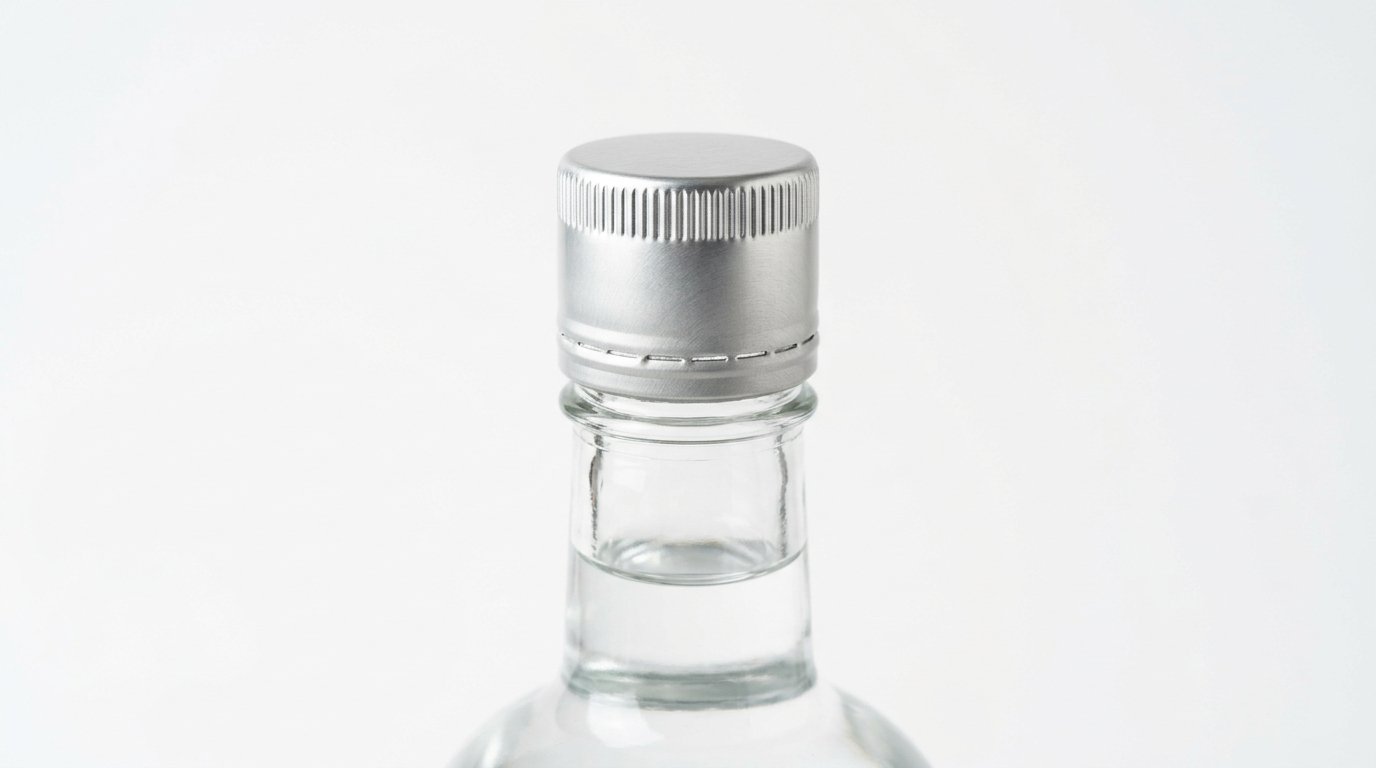
For bottled water and carbonated drinks, the aluminium ROPP (Roll-On Pilfer-Proof) closure with an integral pilfer band is the workhorse format, often combined with a food-grade liner that seals the contents. The mechanics of how that band proves first opening are set out in what a tamper-evident cap is.
Why brands use tamper-evident packaging
Brands adopt tamper-evident packaging for reasons that go well beyond ticking a compliance box.
- Consumer safety. For products consumed directly, such as water and beverages, a visible seal protects buyers from adulterated or refilled product.
- Trust and repeat purchase. A pack that visibly proves it is first-opened reassures the buyer at the shelf, which supports the brand over time.
- Anti-counterfeit and anti-refill. Refilling used bottles with untreated liquid is a genuine risk in some segments. A closure that breaks on first opening makes a reused bottle obvious. The segment where this bites hardest is spirits, covered in liquor bottle caps in India.
- Supply-chain integrity. Retailers and distributors can confirm at a glance that stock has not been interfered with in transit.
Relevance to bottled water and beverages
Bottled water and beverages are among the most sensitive categories because the product is ingested directly and the pack passes through a long distribution chain. Two things make tamper evidence essential here:
- Direct consumption. There is no cooking or processing step after the bottle is opened, so the seal is the last line of defence.
- High refill risk. Empty branded bottles are widely available, so brands need a closure that cannot be quietly reused.
This is why the aluminium ROPP closure is so common on packaged drinking water and beverage lines in India. The band gives clear tamper evidence, and aluminium is inert, taint-free, and easy to print for branding. Two ring designs show the range: the three-part break system used on water closures, and the retained ring that lets a beverage bottle re-close while still showing it was opened.
How it supports FSSAI and BIS expectations
Two regulatory frameworks shape packaging for water and beverages in India.
- FSSAI (Food Safety and Standards Authority of India). Under the Food Safety and Standards Act, 2006 and the Food Safety and Standards (Packaging) Regulations, 2018, packaging materials that touch food must be food-grade and safe, and packs must be sealed and hygienic. FSSAI’s framework broadly expects packaging that protects the product and reassures the consumer, which tamper-evident closures directly support. The packaging detail is unpacked in FSSAI packaging rules for bottled beverages.
- BIS (Bureau of Indian Standards). Packaged drinking water is covered by standard IS 14543. Certification against it (the ISI mark) stopped being compulsory on 17 October 2024 and is now voluntary, but the standard still applies and still expects a securely sealed, hygienic container, and a tamper-evident closure is the standard way bottlers meet that.
These frameworks set the requirements in general terms rather than mandating one specific cap. What they consistently expect is a food-grade, securely sealed pack whose seal is verifiable, and tamper-evident packaging is how brands deliver that. The wording matters when you read a supplier claim, and tamper evident vs tamper resistant vs tamper proof separates the three terms.
Alongside these, the Legal Metrology (Packaged Commodities) Rules, 2011 govern the declarations on the pack (net quantity, MRP, manufacturer details), which is a separate labelling requirement from the seal itself.
Frequently asked questions
Is tamper-evident packaging mandatory in India?
There is no single rule that names one tamper-evident method for all foods. Packaged drinking water is judged against BIS standard IS 14543, though certification against that standard has been voluntary since 17 October 2024, and the FSSAI framework expects packaging that is food-grade, securely sealed, and hygienic. In practice, brands in water and beverages use tamper-evident closures to meet those expectations and to protect consumers.
What is the most common tamper-evident method for bottled water?
The aluminium ROPP (Roll-On Pilfer-Proof) cap with an integral pilfer band is the most common format for bottled water and beverages in India. The band breaks on first opening, giving clear tamper evidence, while a food-grade liner inside the cap seals the contents.
Does tamper-evident packaging stop someone from opening the pack?
No. Tamper-evident packaging reveals that a pack was opened; it does not prevent opening. That is the difference between tamper-evident (shows interference) and tamper-resistant (hard to open). For water and beverages, the goal is clear proof of first opening so the buyer can trust the seal.
Which regulators cover packaging for beverages in India?
FSSAI governs food safety and the safety of food-contact packaging materials, BIS sets product and packaging standards such as IS 14543 for packaged drinking water, and the Legal Metrology rules govern the mandatory declarations printed on the pack. Together they shape how beverage packaging must be made, sealed, and labelled.
To see how a tamper-evident closure is built, read our guide to the parts of a ROPP cap, or explore R Vision’s Aqua Cap for packaged drinking water. The application guide for that segment is closures for packaged drinking water, and the wider library is on Learn.