
 R Vision Technical Team
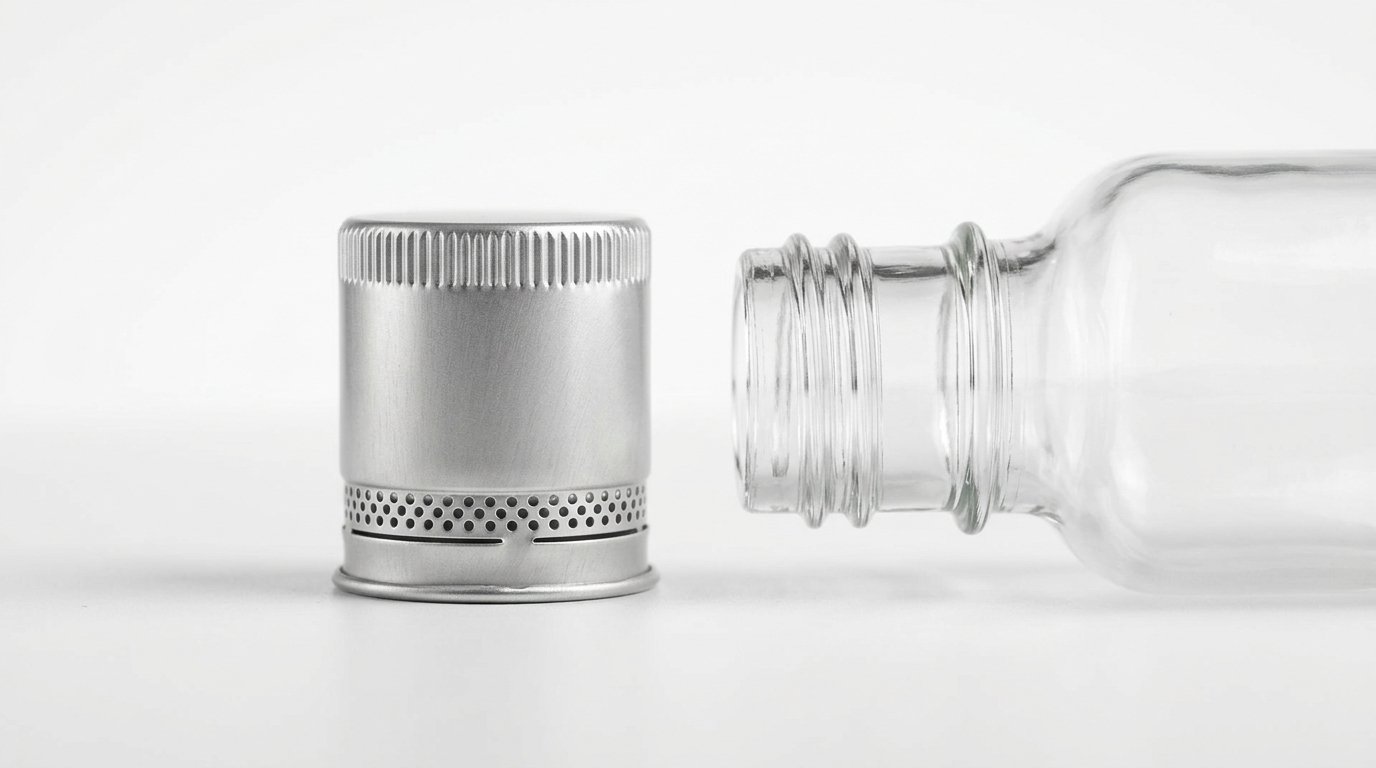
To measure a bottle cap size, measure the bottle neck rather than the cap. With a vernier caliper, read the diameter across the threads and the depth from the top of the neck to the underside of the locking ring, then find both readings in the lookup table below. On the Indian roll-on pilferproof standard, a neck reading 26.77 to 27.41 mm across the threads with a depth of about 15.2 to 15.7 mm is a 28 mm finish and takes a 28 mm cap, written as diameter by height such as 28/15 mm. A reading of 28.0 to 28.6 mm with a depth of about 32 mm is not a 28 at all: it is the 30 mm extra deep spirits finish.
What a bottle cap size actually describes
An aluminium ROPP cap size is written as two numbers, diameter by height, both in millimetres:
- Diameter: the nominal diameter of the cap shell, set by the bottle’s neck finish.
- Height: the skirt length that runs down the neck, set by the neck length and the position of the tamper band.
So 28/15 mm means a 28mm diameter shell with a 15mm skirt height, the volume size for water and soft drinks in India; see 28mm ROPP caps. The diameter is the figure that must match; the height then follows the bottle. Get the diameter wrong and the cap will not seal at all, so it is the number to fix first.
The nominal size is not what a caliper reads. A cap sold as 28 mm is made for a neck that measures a little under 28 across its threads, because the shell has to slide over the neck before the rollers form it. That is the answer to the common puzzle of a cap and a bottle described as “the same size” when the readings differ.
What you need to measure
You can get a close reading with simple tools:
- A vernier caliper, digital or manual, reading to 0.02 mm or better, with a depth rod.
- A clean, empty sample bottle.
- The bottle’s neck-finish drawing or standard reference, if you have one.
A caliper reading puts you in the right size band. It is a starting point, not a final specification, because thread profile, rim thickness, and glass or PET tolerances all affect the final fit.
Measuring the bottle neck, step by step
1. Measure across the threads
Close the caliper jaws across the outside of the thread, at its widest, and read in millimetres. Turn the bottle a quarter turn and measure again, because glass necks are rarely perfectly round. Take the larger reading. This is the T dimension, the figure the lookup table is built on.
2. Measure the locking ring
Below the thread of a roll-on pilferproof finish is a raised ring, wider than the thread, that the pilfer band tucks under. Measure across it. If there is no ring at all, the bottle was made for a pre-threaded screw cap, not a ROPP closure; the difference is explained in GPI and SPI finishes against ROPP finishes.
3. Measure the depth to the underside of the ring
Rest the end of the caliper on the top of the neck and extend the depth rod down the side until it meets the underside of the locking ring. This is the reading that separates a standard finish from a deep or extra deep one, and it decides whether the bottle wants a short or a long skirt. Water and soft-drink bottles usually take a shorter skirt; spirits bottles often take a taller one for a fuller pilfer-proof band.
4. Note the neck finish
If the bottle’s neck finish is stamped or documented, record it, along with any drawing number from the bottle supplier. The neck finish is the shaped, threaded top of the bottle, and it is the true reference for the cap size. Codes such as 38-400 are decoded in neck finish codes and cap sizes.
5. Write the size as diameter by height
Combine the result into the standard format, for example 28/15 mm. State this when you talk to a closure supplier so there is no ambiguity.
The lookup: from your reading to the cap size
Find the row where both your thread reading and your depth reading fall. The ranges are the tolerance bands of IS 7511 (Part 4), the Bureau of Indian Standards’ dimensions for roll-on threads pilferproof, so a correctly made bottle reads inside them.
| Across the threads | Depth to underside of ring | Neck finish | Cap size it takes |
|---|---|---|---|
| 21.19 to 21.69 mm | 12.58 to 12.96 mm | 22 mm standard | 22 mm ROPP |
| 24.16 to 24.66 mm | 13.90 to 14.28 mm | 25 mm standard | 25 mm ROPP |
| 26.77 to 27.41 mm | 15.17 to 15.67 mm | 28 mm standard | 28 mm ROPP, the diameter R Vision makes as 28/15 mm |
| 27.99 to 28.63 mm | 31.70 to 32.20 mm | 30 mm extra deep | 30 mm long skirt ROPP |
| 29.90 to 30.53 mm | 15.17 to 15.67 mm | 31.5 mm standard | 31.5 mm ROPP |
| 29.89 to 30.53 mm | 21.14 to 21.64 mm | 31.5 mm deep | 31.5 mm ROPP, taller skirt |
| 36.73 to 37.49 mm | 13.22 to 13.72 mm | 38 mm shallow | 38 mm ROPP |
| 44.38 to 45.14 mm | 13.22 to 13.72 mm | 46 mm shallow | 46 mm ROPP |
| 51.50 to 52.50 mm | 15.17 to 15.67 mm | 53 mm standard | 53 mm ROPP |
| 68.50 to 69.50 mm | 14.49 to 14.87 mm | 70 mm standard | 70 mm ROPP |
| 27.00 to 27.64 mm, no locking ring | Not applicable | 28 mm GPI 400, 410 or 415 thread | 28 mm pre-threaded screw cap, not ROPP |
Three readings deserve a second look. A thread reading around 28 mm with a deep neck is a 30 mm closure, not a 28. The 31.5 mm standard and deep finishes read the same across the thread and differ only in depth. And the 28 mm roll-on finish and a 28 mm screw-cap thread overlap in diameter, so the locking ring is what tells them apart. 18 mm and 20 mm roll-on closures are also in circulation but are not in IS 7511 (Part 4), so for those sizes work from the bottle maker’s drawing. Every other size here besides 28/15 mm is industry reference; R Vision manufactures 28/15 mm only.
Diameters and the skirt heights in circulation for each are listed in the ROPP cap size chart, and the standard behind the table in neck finish standards on Indian glass bottles.
Does your bottle take a 28/15 mm cap?
R Vision Closures makes one size, 28/15 mm, in two closures: Aqua Cap for packaged drinking water and Bev Cap for soft drinks, juices and other beverages. A bottle takes it when your readings land here:
| Reading | Takes 28/15 mm | Does not |
|---|---|---|
| Across the thread | 26.77 to 27.41 mm | 27.99 mm and above with a deep neck: the 30 mm extra deep finish |
| Depth to the underside of the ring | 15.17 to 15.67 mm | About 32 mm: a long-skirt spirits finish |
| Locking ring below the thread | Present | Absent: a screw-cap thread such as 28-410 |
| Finish named on the drawing | MCA I/II/III, MCA 7.5 R or MCA 7.5 RF on glass; PET or BPF on PET | PCO 1810, PCO 1881, Alaska, 29/25 or 30/25: finishes for moulded plastic caps |
If the readings fit but the drawing names a finish outside that list, ask the bottle maker before ordering. Each of the five finishes is explained on the 28 mm ROPP neck finishes page, and the caps on each bottle material on the 28 mm PET bottle caps and 28 mm glass bottle caps pages.
Measuring a cap, or a bottle that is already capped
If all you have is a capped bottle, measure the cap across its smooth band just below the top panel, not across the rolled thread. That reading comes out close to the nominal size of the closure: one published 30 x 60 mm aluminium closure, for example, measures 29.75 mm across. It tells you the diameter class, 28 against 30 against 31.5, but not the finish depth. Then measure the height from the top of the cap to the lower edge of the pilfer band. For the finish itself, remove a cap and measure the neck as above.
Measuring a loose cap works the same way: diameter across the plain band and height from the top panel to the skirt’s edge. Treat it as a guide only, because the bottle neck the cap has to seal on is always the safer reference.
Measuring the volume a cap holds
To find how much water a bottle cap holds, fill it to the brim on a kitchen or laboratory scale that reads to 0.01 g, and read the weight. At room temperature 1 g of water is very close to 1 ml, so the reading in grams is the volume in millilitres. A 1 ml or 5 ml graduated syringe does the same job without a scale.
What 28/15 mm means
The size 28/15 mm is a common specification for packaged drinking water and beverage closures in India. It describes a 28mm diameter shell with a 15mm skirt height:
| Figure | Meaning | Set by |
|---|---|---|
| 28 mm | Nominal diameter of the cap shell | The bottle’s neck finish |
| 15 mm | Skirt height down the neck | Neck length and tamper-band position |
Because two bottles quoted at the same nominal 28mm can still have slightly different neck finishes, a matching diameter does not guarantee a fit on its own. The neck finish is the deciding factor. The 28 mm bottle sizes used across Indian water packs, from 250 ml to 2 litres, are set out in water bottle cap sizes in India.
Matching the cap to the bottle finish
The neck finish, its diameter, thread profile, thread pitch, rim, and height, is what drives the size. A ROPP shell is formed onto that finish during capping, so the finish, not the cap, sets the fit. What ROPP capping involves describes that forming step, and what a ROPP cap is the closure itself. Two rules follow:
- Match the diameter to the neck finish, not to a nominal label. A 28mm finish needs a 28mm shell; a 30mm shell will not seal on it. What that wider finish is used for is covered in 30mm ROPP caps.
- Verify with a physical sample. Send the closure supplier a sample bottle wherever possible. A sample removes the ambiguity a drawing alone can leave, and approving samples before a full run is the most reliable way to avoid leakers and poor thread pickup.
Frequently asked questions
How do I measure a bottle cap size at home?
Use a vernier caliper on a clean, empty bottle. Measure across the neck threads at their widest, then use the depth rod to measure from the top of the neck to the underside of the locking ring. Match both readings to a finish table: 26.77 to 27.41 mm across the threads with a depth near 15.5 mm is a 28 mm finish. Confirm with a sample before ordering.
What does 28/15 mm mean on a bottle cap?
It means a cap with a 28mm nominal diameter and a 15mm skirt height. The 28mm diameter must match the bottle’s neck finish, and the 15mm height is how far the skirt runs down the neck. This size is common for packaged drinking water and beverage closures in India.
How do I measure the neck size of a bottle in mm?
Close a caliper across the thread at its widest and read in millimetres, then turn the bottle a quarter turn and repeat, keeping the larger figure. The neck size is the finish that reading falls in, not the reading itself: a 28 mm roll-on finish measures 26.77 to 27.41 mm across the threads, and a 30 mm extra deep finish 27.99 to 28.63 mm.
How do I measure the diameter of an aluminium capped bottle?
Measure across the smooth band of the cap just below its top panel, not across the rolled thread. The reading comes out close to the closure’s nominal size and tells you its diameter class. It does not tell you the depth of the finish, so for ordering, remove a cap and measure the neck across the threads and down to the locking ring.
Should I measure the bottle or the cap?
Measure the bottle’s neck finish. The neck finish drives the size, because a ROPP shell is formed onto it during capping. If you only have an existing cap, you can measure its diameter and skirt height as a guide, but the safest reference is always the bottle neck the cap has to seal on.
Are two caps of the same diameter interchangeable?
Not always. Two bottles quoted at the same nominal diameter can still have different neck finishes, depths and tolerances depending on the bottle maker. A matching diameter is necessary but not sufficient. Check a closure against your specific bottle before committing to a production quantity.
Sources
- BIS, IS 7511 (Part 4): 1986, Roll-on Threads Pilferproof, for the thread diameter and ring depth bands by size and finish type.
- Evergreen Resources, glass neck finish dimensions, for the GPI 28-410 thread diameter, converted from inches.
- BT-Watzke, vinotwist 30 x 60 technical details, for the published diameter of a 30 x 60 mm aluminium closure.
For standard sizes and typical applications, see the ROPP cap size chart, or contact us with a sample bottle to confirm your size. R Vision’s Aqua Cap and Bev Cap are both 28/15 mm aluminium ROPP caps, and more sizing guides sit in the learn library.