
 Sankalp
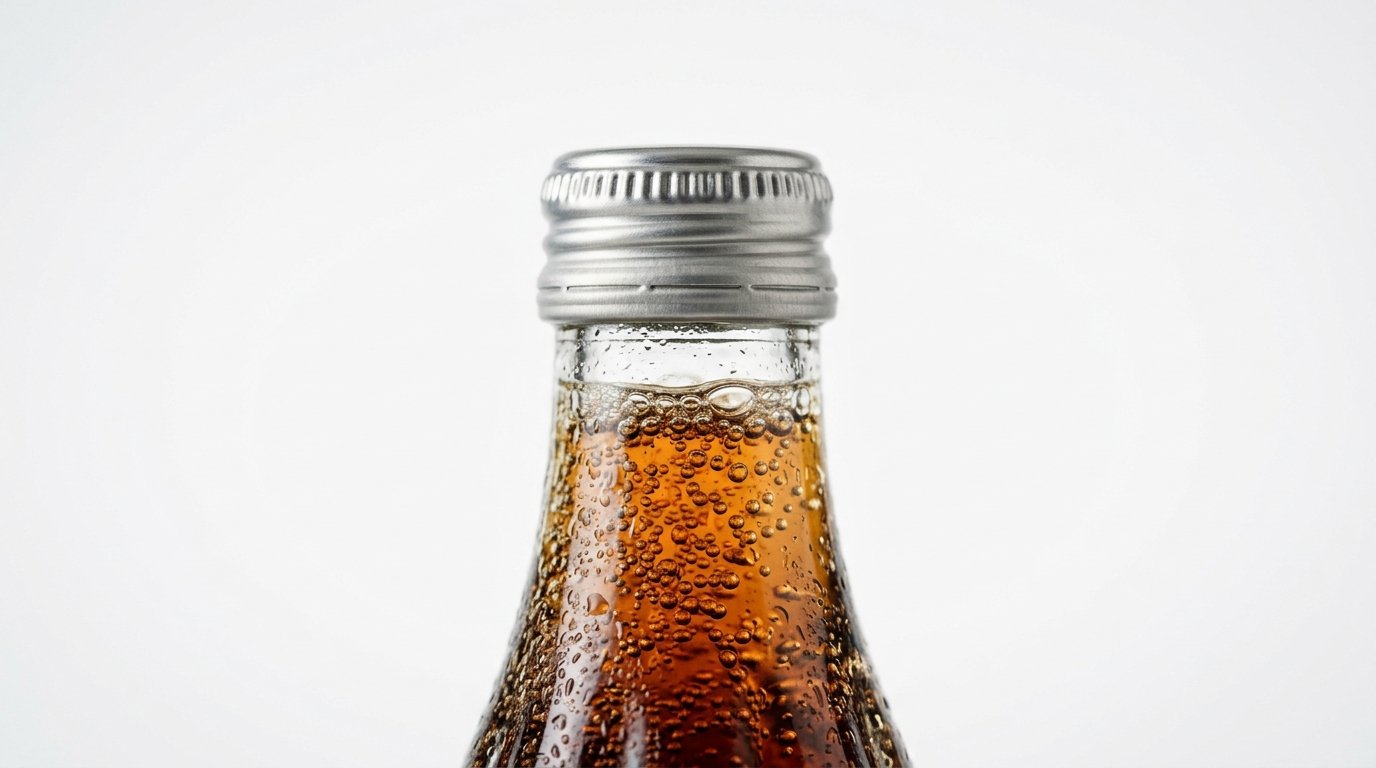
A CSD closure is a bottle cap built for carbonated soft drinks (CSD). Those drinks typically carry about 2 to 4.5 volumes of CO2, roughly 4 to 9 grams per litre, and at 20 °C that gas pushes on the cap with around 1.3 to 4 bar above atmospheric pressure, rising steeply as the bottle warms. So a CSD closure has to hold that pressure through hot storage, seal against slow gas loss, and show first opening, which is why closures for carbonated lines are commonly rated to 8 bar.
What CSD stands for
CSD is short for carbonated soft drink. It covers colas, lemon and lime sodas, flavoured fizzy drinks, and carbonated water. The defining feature is dissolved CO2, which gives the fizz and, once the bottle is sealed, builds pressure inside it. Every design choice in a CSD closure follows from that pressure. A “CSD bottle” is a bottle made to hold one, usually PET on a pressure-rated finish, or glass.
The pressure requirement, in volumes of CO2 and in bar
Bottlers specify carbonation in volumes of CO2, and the closure has to hold the pressure that carbonation creates. One volume is one litre of CO2 gas dissolved in one litre of drink, close to 2 grams per litre. The pressure the same drink puts on the cap is not fixed: it depends on temperature.
| Drink type | Typical carbonation | CO2 per litre, approximate | Pressure on the cap at 20 °C, approximate |
|---|---|---|---|
| Fruit-flavoured sodas | About 2 to 3 volumes | About 4 to 6 g | About 1.3 to 2.5 bar |
| Colas and lemon-lime sodas | About 3.5 to 4 volumes | About 7 to 8 g | About 3 to 3.5 bar |
| Soda water and strongly carbonated water | About 4 to 4.5 volumes | About 8 to 9 g | About 3.5 to 4 bar |
The carbonation ranges are typical industry values, and each brand sets its own. The pressures are gauge pressure, above atmospheric, worked out from how much CO2 water holds at 20 °C. Sugar lowers that slightly, so a sweetened drink reads a little higher than the table, and the carbonation chart for your own product is the figure to specify against.
Heat is what makes the rating matter. A cola at about 4 volumes that reads roughly 3.5 bar at 20 °C reads around 5 bar at 30 °C and about 6.5 bar at 40 °C, a temperature a pack can reach in an uncooled godown or a closed truck in an Indian summer. An 8 bar rating is set to stay above that. The full temperature table, and what happens to the closure at each point, is in closures for carbonated soft drinks, and the unit itself in what an 8 bar pressure rating means.
What a CSD closure has to do
A closure for carbonated drinks does four jobs at once, and a still-water cap is only asked to do two of them.
- Hold pressure. The closure must not deform or blow off at the highest pressure the pack will see, which is at its hottest, not at filling.
- Seal against gas loss. A slow leak spills nothing. It lets CO2 out and flattens the drink before its shelf life ends. The liner inside the cap forms this gas barrier.
- Release pressure safely on opening. Gas should escape past the seal while the thread still holds the cap, so the cap does not come free under pressure. Plastic CSD closures do this with vent slots cut through the thread.
- Show tamper evidence. Buyers need to see that the bottle is unopened. A ring that breaks on first opening gives that signal, as described in what is a tamper-evident cap.
The neck finishes used for carbonated drinks
A CSD closure is matched to a neck finish, and carbonated lines run on a small set of published ones. Each finish takes one closure format, so the finish decides whether the closure is plastic, aluminium or a crown.
| Finish | Container | Closure it takes | Published by |
|---|---|---|---|
| PCO 1810, 28 mm | PET | Moulded plastic screw cap | ISBT Threadspecs |
| PCO 1881, 28 mm | PET, the shorter and lighter successor to 1810 | Moulded plastic screw cap | ISBT Threadspecs |
| 26/22 GME 30.40 | PET, specified for carbonated beverages | Moulded plastic screw cap, tethered cap possible | CETIE |
| MCA 3, GME 32.01 | Glass with internal pressure | Aluminium roll-on closure | CETIE |
| 7.5 RF universal, GME 32.02 | Glass for pressurised or vacuum liquids | Aluminium roll-on closure | CETIE |
| 26 H 126 and 26 H 180 | Glass | Crown cap | ISO |
PCO 1810, PCO 1881 and GME 30.40 take plastic closures, so a line running them buys from a plastic closure maker. The glass finishes an aluminium roll-on closure runs on, with their CETIE sheet numbers, are set out in glass bottle neck finishes for ROPP caps, and the crown format in crown cap vs ROPP cap.
The closure specification that meets it
A CSD closure specification has six lines. The table sets out what to ask for on each and where R Vision’s Bev Cap sits.
| Specification line | What to ask for on a carbonated line | Bev Cap by R Vision |
|---|---|---|
| Pressure rating | Above the pressure your drink reaches at its hottest storage | Rated to 8 bar |
| Size and finish | Matched to the bottle or preform drawing | 28/15 mm, against MCA I/II/III, MCA 7.5 R, MCA 7.5 RF and PET BPF finishes |
| Liner | A resilient liner that stays pressed to the rim and is food-grade | PVC-free TPE liner |
| Tamper evidence | A ring that breaks visibly on first opening | Ring stays attached after opening, in Round Ring, Two Slit or Five Slit |
| Fill types | Carbonated, plus hot or cold fill if the line runs both | Hot fill, cold fill and carbonated |
| Application | A capping head set to the finish; on a roll-on closure that means head load and roller pressure rather than a torque figure | Standard roll-on application machinery |
The application line is where roll-on closures differ from screw caps. A ROPP cap has no thread until the head forms one, so the settings that matter and what to measure afterwards are covered in cap torque specifications.
What fails, and why
Most CSD closure failures are undramatic. They are slow gas leaks that leave the bottle looking sealed while the drink flattens on the shelf.
| Failure | What you see | Usual cause |
|---|---|---|
| Slow CO2 loss | Bottle looks sealed but the drink is flat before its date; a PET bottle feels soft | Liner not in continuous contact with the rim: a hardened liner, a damaged rim, or too little head load at capping |
| Leak at the rim | Wet or sticky shoulder, product in the case | A chipped or out-of-tolerance finish, or a cap run on the wrong finish |
| Domed top or lifted cap | Top panel bulged, cap riding high on the neck | Pressure above what the closure is rated for, usually from heat, or a still-water cap used on a carbonated line |
| Cap spins without opening | Cap turns but does not climb the thread | Thread poorly formed at capping, from low roller pressure or worn rollers |
| Cap released under pressure | Cap comes free with force when opened | Gas not venting before the thread lets go, often on an over-carbonated or very warm pack |
The first two rows trace to the liner and the rim far more often than to the shell. Why water bottle caps leak shows how to read the impression the liner leaves on the rim, which separates a capping fault from a bottle fault, and how closures prevent carbonation loss sets out the seal mechanics and why testing after warm storage tells you more than testing a fresh fill.
Why the liner is central
The shell gives the closure its shape and thread, but the liner does the sealing. When the cap is applied, the liner compresses against the bottle rim and blocks the path CO2 would take out. A hardened or poorly fitted liner is the most common cause of a drink going flat. Many CSD closures now use a PVC-free TPE liner for cleaner compliance; see PVC-free liners for beverages.
A CSD closure in practice
R Vision’s Bev Cap is a beverage closure suited to carbonated fills: a 28/15 mm aluminium ROPP cap rated to 8 bar, with a PVC-free TPE liner and a pilfer-proof ring that stays attached after opening so the bottle can be closed again. The questions beverage bottlers ask before ordering it are answered in the Bev Cap FAQ. For the wider category, beverage closures in India covers the formats by drink type.
Packaging and labelling for carbonated drinks sold in India also sit under FSSAI packaging rules, so the closure decision and the compliance decision are worth taking together rather than one after the other. R Vision’s range is listed on the Products page.
Frequently asked questions
What does CSD stand for?
CSD stands for carbonated soft drink. It covers colas, sodas, flavoured fizzy drinks and carbonated water. The common feature is dissolved CO2, which creates the fizz and builds pressure inside a sealed bottle.
How is a CSD closure different from a normal cap?
A CSD closure is specified to hold internal CO2 pressure, seal against gas loss and release pressure safely on opening, while a still-drink cap mainly has to hold liquid and keep air out. That means a CSD closure carries a pressure rating and a liner chosen to keep gas in through warm storage.
What pressure does a CSD closure need to handle?
It needs to handle the pressure the drink reaches at its hottest. A cola at about 4 volumes of CO2 pushes roughly 3.5 bar at 20 °C and about 6.5 bar at 40 °C, so closures for carbonated lines are commonly rated to 8 bar to stay above the hot end of storage and transport.
How many volumes of CO2 is a soft drink?
It depends on the drink and the brand. Fruit-flavoured sodas typically sit at about 2 to 3 volumes, colas and lemon-lime sodas at about 3.5 to 4, and soda water at about 4 to 4.5. One volume is close to 2 grams of CO2 per litre.
Which neck finishes are used for carbonated drinks?
On PET, the 28 mm PCO 1810 and PCO 1881 finishes and the 26/22 GME 30.40 finish, all of which take plastic screw caps. On glass, pressure-rated roll-on finishes such as MCA 3 and the 7.5 RF universal finish take aluminium closures, and the 26 H 126 and 26 H 180 crown finishes take crown caps.
Does the liner affect how long a drink stays fizzy?
Yes. The liner forms the actual seal against the bottle rim, so a resilient, well-compressed liner keeps CO2 in and the drink fizzy. A hard or poorly compressed liner lets gas escape slowly and flattens the drink before its shelf life ends.
Sources
- ISBT Threadspecs, International Society of Beverage Technologists, for the PCO 1810 and PCO 1881 finishes.
- CETIE finish data sheets (GME), for GME 30.40, GME 32.01 and GME 32.02.
- ISO, for the 26 H 126 and 26 H 180 glass crown finishes.
See the Bev Cap product page or contact R Vision to match a CSD closure to your line.