
 Sankalp
A ROPP cap quote is built from seven lines: the aluminium in the shell, the cap size and metal gauge, the liner, the decoration, the order volume against the minimum order tier, freight to your plant, and, for an imported cap, customs duty. Metal and decoration move the number most. This page is about that cost structure, the reasons a quote reads the way it does. If you want the price question itself, what drives ROPP cap prices in India is the page for that.
Key takeaways
- Aluminium is the largest single input, and it is a traded commodity, so a cap quote is dated rather than fixed.
- Decoration is the biggest controllable swing: plain silver, plain colour, litho printing, embossing and hot foiling each add a process step.
- Decoration also moves the minimum order: 50,000 plain silver, 200,000 plain colours, 300,000 litho printing at R Vision.
- Setup costs are fixed per run, so unit cost falls as the run lengthens. That is the whole reason minimums exist.
- Caps are light but bulky, so freight is charged on space and distance to your plant shows in landed cost.
- An imported cap adds customs duty, clearing and inland transport to a unit price that looked lower.
Why a cap has a cost structure and not a price
A closure is a small assembly made to your specification: an aluminium shell, a TPE liner, a PE ring, and whatever decoration your brand needs. Change the fill from still water to a carbonated drink and the seal has to do more work. Change plain silver to a printed cap and a plate has to be made. Both move the quote, and neither is visible in a headline per-piece number.
That is why a manufacturer asks for the specification first, why two quotes for “28/15 mm ROPP caps” can differ honestly, and why comparing them means comparing the seven lines below rather than the totals.
The seven cost lines
| Cost line | Direction | What actually moves it |
|---|---|---|
| Aluminium input | Largest share, moves with the metal market | Shell weight and the metal rate on the day |
| Cap size and gauge | More metal, more cost | Diameter, skirt height and sheet thickness |
| Liner | Varies by material and fill | TPE liner for beverage and water fills |
| Decoration | Step change, not a slope | Coating, plates, embossing tooling, foil |
| Volume against MOQ tier | Falls as the run lengthens | Setup spread across more pieces |
| Freight | Adds to landed cost | Distance and carton volume, not weight |
| Import duty | Applies to imported caps only | Tariff classification at the border |
Aluminium input
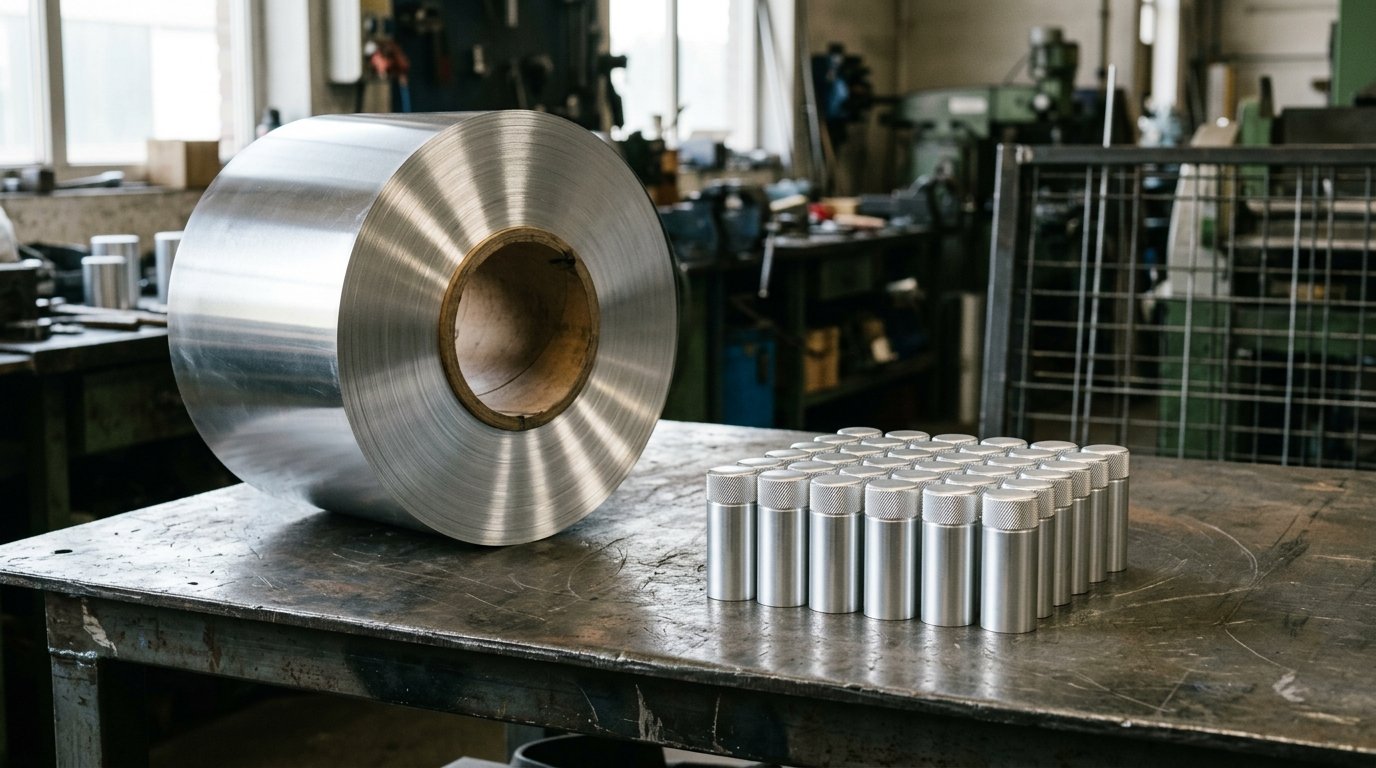
The shell is aluminium, and aluminium is traded, so its cost moves with the metal market. Reference rates published by the London Metal Exchange feed into Indian sheet and coil pricing, and cap quotes follow. Two consequences: a quote carries a validity date for a reason, and a long-term contract usually references the metal rather than fixing a number for a year. On the material itself, see aluminium closures.
Cap size and gauge
Metal cost scales with how much metal is in the cap, so a larger diameter, a longer skirt or a heavier gauge all raise the input. That is why closure quotes are tied to a stated size. R Vision manufactures 28/15 mm, the standard format for packaged drinking water and beverage bottles in India, covered in 28mm ROPP caps. Gauge is not a lever to pull downward on instinct: metal thin enough to save money is also metal thin enough to distort under the capping head.
Liner
The liner is the sealing element and a cost input in its own right. R Vision uses a TPE liner in both Aqua Cap and Bev Cap, rated to hold up to 8 bar, suiting hot fill, cold fill and carbonated products. A PVC-free liner is a different proposition from an older sealing wad, as PVC vs PVC-free cap liners explains. Specify the liner against the fill, not against the quote.
Decoration
Decoration is where cost changes in steps rather than smoothly, because each option adds a process stage:
| Decoration | What is added | Effect |
|---|---|---|
| Plain silver | Nothing beyond the base finish | Base cost, lowest minimum |
| Plain colour | Coating stage and a line changeover | Setup per shade |
| Litho printing | Printing plates made for your artwork, registration setup | Highest setup, highest minimum |
| Embossing | Tooling that carries your relief | Tooling made once, then reused |
| Hot foiling | An additional finishing pass, available on Bev Cap | Adds a stage to the run |
Tooling and plates are one-time costs attached to your design. They are paid once, spread across the run, and reused on repeat orders of the same artwork, which is why a second identical order behaves differently from the first and why changing artwork mid-year resets part of the setup.
Volume against the MOQ tier
Setup, changeover and plate costs are fixed per run. Divide them across 50,000 caps and they are visible in the unit cost. Divide them across a much larger run and they mostly disappear. R Vision’s minimums are 50,000 for plain silver, 200,000 for plain colours and 300,000 for litho printing, and the tiers exist for exactly that reason.
| Order type | MOQ | Why the step |
|---|---|---|
| Plain silver | 50,000 | No customer-specific setup |
| Plain colours | 200,000 | Coating changeover for your shade |
| Litho printing | 300,000 | Plates made for your artwork |
Freight
Caps are light and bulky, so freight is charged against the space the cartons occupy more than their weight. Distance from the plant to your filling line therefore shows up plainly in landed cost, and a supplier within reasonable road distance usually lands cheaper than a distant one quoting the same per-piece figure.
Import duty on imported caps
For imported closures the quoted unit price is not the cost. Add sea or air freight, customs duty and IGST at the border, clearing charges, inland transport from the port, and the working capital tied up while a container is in transit. Duty is assessed against the tariff classification, which for base-metal caps sits under heading 8309, explained in bottle caps HS code and GST; confirm current rates with the CBIC. The full comparison is in imported vs Indian ROPP caps.
Reading a quote like a buyer
Ask for the quote broken into specification, decoration and volume, and ask what it is valid against. Then check whether the metal reference is stated, whether setup and tooling are shown separately from the per-piece cost, and whether the figure is ex-works or delivered. A quote that answers those is comparable. A single number with no specification behind it is not, however low it looks.
Frequently asked questions
What makes one ROPP cap quote higher than another?
Usually specification rather than margin. Cap size and gauge, liner material, decoration, the volume against the supplier’s minimum, and whether freight is included all change the number. Two quotes are only comparable when they describe the same cap, the same decoration and the same quantity delivered to the same place.
Why does aluminium affect cap cost so much?
The shell is the largest material component and it is aluminium, a commodity traded on the open market. When the metal rate moves, the input cost of every cap moves with it. This is why closure quotes carry a validity period and why long-term supply agreements usually reference the metal rate rather than fixing a price for the year.
Does printing raise the cost of a cap?
Yes, in steps rather than gradually. Plain silver is the base. A plain colour adds a coating stage and a changeover. Litho printing adds plates made specifically for your artwork. Embossing and hot foiling add tooling or a finishing pass. Each step also raises the minimum order, so decoration changes both the unit cost and the size of the commitment.
Does a bigger order always cost less per cap?
Generally yes, because setup, changeover and plate costs are fixed for the run and get spread across more pieces. The saving is largest at the low end, where a short run carries the whole setup, and flattens as the run grows. It is the reason minimum order quantities exist at all.
Sources
To price a real specification rather than a category, send your cap size, fill type, decoration and annual volume to R Vision on +91 72620 02754.