
 Sankalp
Food-grade is not a property of a metal or a polymer on its own. It is a judgement about what moves out of a material and into the product, tested under defined conditions. For a bottle cap that means two questions: is the aluminium suitable for food contact, and does the liner, the part actually touching the drink, stay within migration limits. India answers through the Food Safety and Standards (Packaging) Regulations, 2018, the EU through Regulation (EC) No 1935/2004 and Regulation (EU) No 10/2011, the US through 21 CFR Parts 174 to 178.
Key takeaways
- Migration, not composition, is the test. A material is judged by what transfers into the food.
- India’s Packaging Regulations, 2018 require material in direct contact with food to be food-grade.
- Plastic food-contact materials must meet an overall migration limit of 60 mg/kg or 10 mg/dm2 tested by the method in IS 9845, with no visible colour migration.
- In the EU, Article 16 of Regulation (EC) No 1935/2004 and Article 15 of Regulation (EU) No 10/2011 create the document to ask for: a declaration of compliance.
- On a cap, the liner is the food-contact surface that matters. PVC liners rely on plasticisers, the concern PVC-free TPE removes at source.
- R Vision’s position on record is that its closures adhere to USFDA and EU standards, which is not a third-party certification.
The migration principle
Every food-contact material is in slow chemical conversation with the product it holds. Regulators set a ceiling on how much can transfer, and a method for measuring it.
Overall migration caps the total mass of non-volatile substances moving from the material into a food simulant. Specific migration caps named substances individually, which is how heavy metals and particular monomers are controlled. A material passes because it was tested at defined times and temperatures, not because a supplier called it food-grade in an email.
Fill method and shelf life therefore change the answer, which is why liner families are matched to products in bottle cap liner materials.
India: the FSSAI framework
The Packaging Regulations, 2018 state the requirement plainly: any material coming into direct contact with food, or likely to, must be of food-grade quality. The regulation then splits into schedules by material family, with metal and plastics treated separately.
For plastics, including the liner in a cap, the overall migration limit is 60 mg/kg or 10 mg/dm2 tested as per IS 9845, with no visible colour migration. IS 9845 is the BIS method for overall migration from plastics intended to contact foodstuffs, using simulants such as distilled water and various acetic acid and ethanol concentrations.
For metal, the schedule references Indian Standards for the stock rather than the finished closure: IS 737, wrought aluminium and aluminium alloy sheet and strip for general engineering purposes, and IS 15392, aluminium and aluminium alloy bare foil for food packaging. Useful when asking where a coil came from, less useful as a claim about a finished cap, which is neither sheet stock nor foil. The licensing picture is in FSSAI packaging rules for bottled beverages and IS 14543.
Europe and the United States
| Framework | What it governs | The document it produces |
|---|---|---|
| Regulation (EC) No 1935/2004 | The general safety requirement for all food-contact materials, in Article 3 | A written declaration of compliance, required by Article 16 |
| Regulation (EU) No 10/2011 | Plastics, including the authorised substance list and the migration testing rules in Article 18 | A declaration of compliance under Article 15, carrying the information in Annex IV |
| 21 CFR Parts 174 to 178 | US food-contact substances: 174 general, 175 adhesives and coatings, 176 paper and paperboard, 177 polymers, 178 adjuvants | A statement of the clearance relied on and its conditions of use |
The pattern is the same in all three. A supplier does not assert safety. It names the rule it complies with and holds evidence the material was tested under it. For an Indian bottler exporting, that paper trail is what a foreign buyer’s quality team asks for first.
Why PVC liners raised concern
PVC on its own is rigid. To make a liner soft enough to conform to a bottle rim, PVC compounds are softened with plasticisers, and it is the plasticisers rather than the polymer that created the food-contact question. They can migrate, and the risk rises with fatty or acidic contents and long shelf lives.
A PVC-free liner, typically a TPE (thermoplastic elastomer), seals without needing them, so it removes the question rather than managing it. That is why PVC-free is now the default on new water and beverage launches. The material comparison is in PVC vs PVC-free cap liners, and the commercial case in why PVC-free liners matter for beverage brands.
What to ask a supplier to evidence
Ask for documents that prove something, not documents that describe something.
- A written declaration for the food-contact materials, naming the framework relied on.
- An overall migration test report for the liner, with simulant, time and temperature stated.
- A specific migration or heavy-metals declaration where your buyer requires one.
- Traceability for the aluminium coil, back to a mill lot.
- Written confirmation the liner is PVC-free, if you are making that claim on pack.
- Batch-level conformity documents, not one report from three years ago.
Where R Vision sits
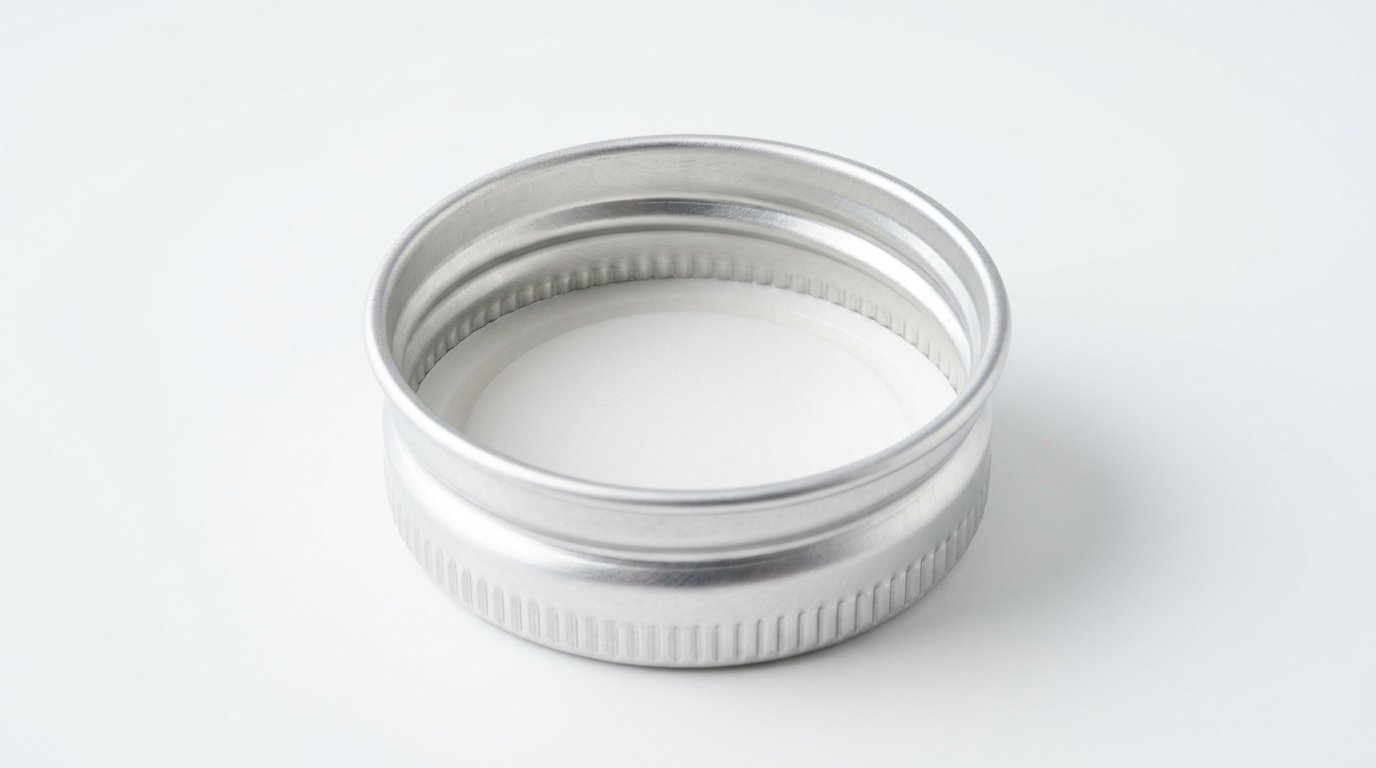
R Vision manufactures 28/15 mm aluminium ROPP closures in Sinnar, Nashik. Both product families use a TPE liner, and the Bev Cap liner is PVC-free. The position on record is that the closures adhere to USFDA and EU standards. That phrasing is deliberate: it describes the standards the closures are made to, not a third-party certificate. If your auditor needs a named document, ask before ordering. Start at contact us, or the Aqua Cap specification.
Frequently asked questions
What does food-grade actually mean for a bottle cap?
It means the materials that touch the product have been assessed against migration limits under a recognised framework, and that evidence exists to show it. It is not a property you can see. On a cap, the liner is the component in direct contact with the drink, so a food-grade claim about a cap is a claim about the liner and the coating inside the shell.
Is aluminium safe for food contact?
Aluminium is widely used in food packaging and is treated as suitable when the stock and any internal coating are specified for that use. India’s framework addresses metal and metal alloys in their own schedule and references Indian Standards for aluminium sheet, strip and food-packaging foil. The practical question is whether the supplier can trace the coil and evidence the coating and liner.
What is an overall migration limit?
It is a cap on the total non-volatile substance that may transfer from a packaging material into a food simulant under defined test conditions. In India the limit for plastic food-contact materials is 60 mg/kg or 10 mg/dm2, tested by the method in IS 9845, with no visible colour migration. It works alongside specific migration limits, which control named substances individually.
Why do brands specify PVC-free liners?
Because PVC liners need plasticisers to stay soft, and those plasticisers are what can migrate into the product. A PVC-free liner such as TPE seals just as reliably without them, so the concern does not arise. For drinking water and beverages, where the product is consumed directly and shelf lives are long, removing the question is easier than defending it.
What document should I ask a cap supplier for?
Ask for a written declaration of compliance for the food-contact materials, naming the framework it is made against, plus a migration test report for the liner stating the simulant, temperature and duration. A marketing claim that a cap is food-grade is not evidence.
Sources
- FSSAI, Food Safety and Standards (Packaging) Regulations, 2018
- IS 9845, overall migration from plastics in contact with foodstuffs, BIS
- IS 737, wrought aluminium and aluminium alloy sheet and strip, BIS
- IS 15392, aluminium and aluminium alloy bare foil for food packaging, BIS
- European Commission, food contact materials: Regulation (EC) No 1935/2004 and Regulation (EU) No 10/2011
- 21 CFR Parts 174 to 178, indirect food additives
Regulations are amended, so confirm the current text first. More guides are on Learn.