
 Sankalp
Bottle and beverage brands are moving away from PVC cap liners toward PVC-free options, mainly TPE, because of health scrutiny, tightening regulations, and export requirements. A PVC-free liner delivers the same seal against pressure and leakage without the chlorine-based chemistry and plasticiser concerns that have put PVC under pressure. For a closure that touches food and drink, the material of the sealing liner matters as much as the metal shell.
What the Liner Does and Why PVC Was Used
The liner is the soft layer pressed inside a cap that forms the actual seal against the bottle neck. It has to stay food-safe, hold pressure, and survive filling temperatures. PVC (polyvinyl chloride) was long used for liners because it seals well and is inexpensive.
The concern with PVC is not the seal; it is the chemistry. PVC liners have historically relied on plasticisers to stay soft, and there is ongoing scrutiny over what can migrate from those additives into the product over time. That scrutiny, more than any single failure, is what pushed the industry to look for cleaner alternatives. For the underlying comparison, see PVC vs PVC-free cap liners.
The Three Pressures Driving the Shift
| Pressure | What is changing |
|---|---|
| Health | Scrutiny over plasticisers and migration from PVC into food and drink |
| Regulatory | Food-contact rules tightening globally, with cleaner-liner expectations |
| Export | Buyers in stricter markets increasingly ask for PVC-free food-contact materials |
Export pressure is often the sharpest of the three. An Indian bottler or beverage brand that wants to sell into markets with strict food-contact rules will frequently be asked to prove its closures use PVC-free liners. Rather than run two specifications, many brands standardise on PVC-free across the board.
What TPE Liners Offer
TPE (thermoplastic elastomer) is the common PVC-free liner material. It is designed to seal without relying on the plasticiser system that made PVC a concern, so it removes the migration question at the source. In practice, a well-made TPE liner:
- Seals reliably against internal pressure, including carbonated fills.
- Handles a range of filling temperatures, from cold to hot.
- Avoids chlorine-based chemistry, which also simplifies end-of-life handling and fits the same single-material logic that makes aluminium caps recyclable.
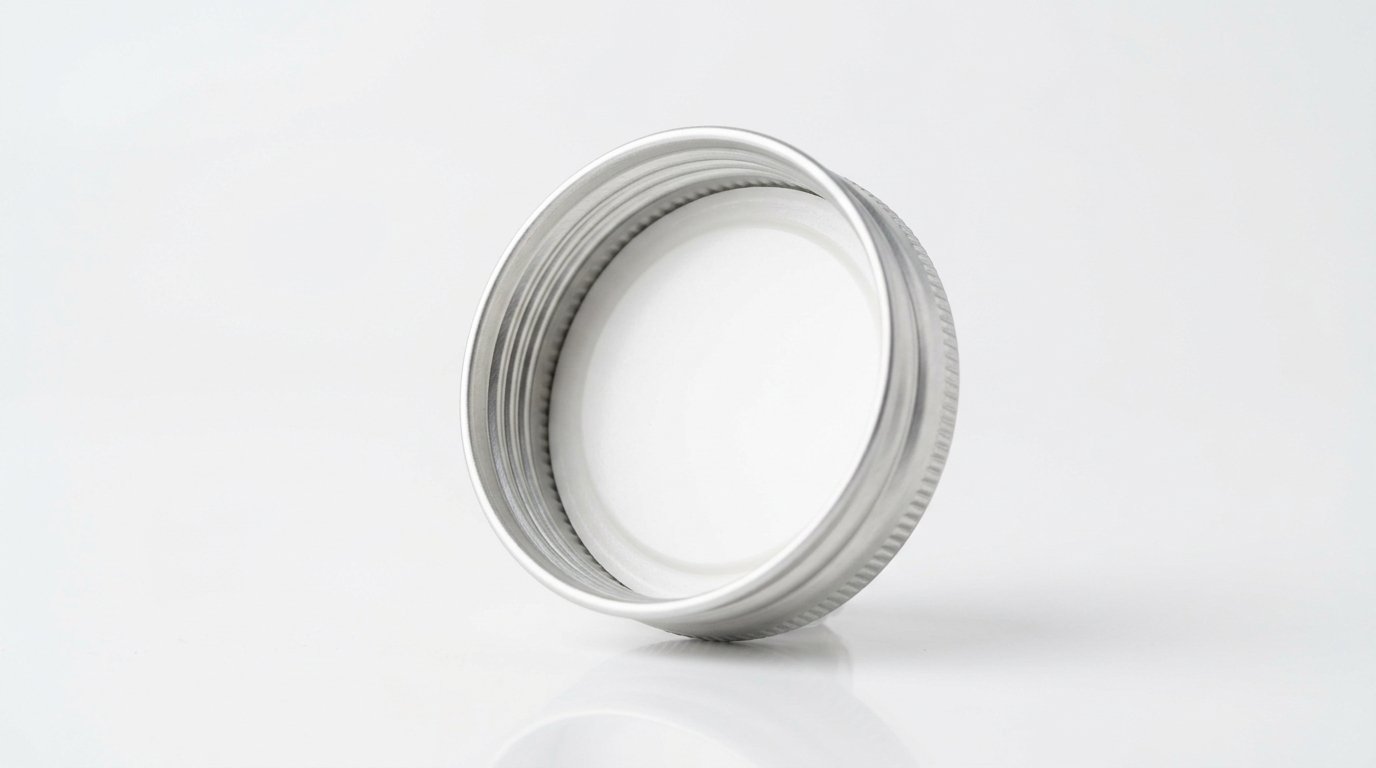
R Vision’s Bev Cap uses a PVC-free TPE liner and keeps its pilfer-proof ring attached after opening so the cap reseals. That combination, a clean liner plus a resealable ring, is exactly what beverage brands moving off PVC are looking for. See the Bev Cap product page and the deeper explainer on PVC-free liners for beverages.
The India and Export Angle
For Indian brands, the shift lands on two fronts. Domestically, packaged food and beverage packaging sits under FSSAI food-safety expectations, so cleaner food-contact materials fit the direction of travel. On the export side, PVC-free is fast becoming a baseline ask from overseas buyers rather than a premium extra.
The practical read for a bottler is simple. Specifying a PVC-free liner now avoids a costly re-specification later when an export order, a private-label contract, or a tighter rule forces the change anyway. It is cheaper to standardise once than to switch mid-contract.
What to Check When You Switch
Moving to PVC-free is mostly a specification decision, but confirm the essentials:
- The liner is genuinely PVC-free (TPE), not just relabelled.
- The seal is validated for your fill type, including carbonation and fill temperature.
- The closure still meets your pressure rating; R Vision’s caps are rated to 8 bar.
For how the metal shell and liner work together, see what is a cap liner and bottle cap liner materials.
Frequently asked questions
Why are brands moving away from PVC cap liners?
Brands are shifting because of health scrutiny over plasticisers migrating from PVC, tightening food-contact regulations, and export buyers increasingly requiring PVC-free materials. TPE liners seal just as well without the chlorine-based chemistry, so the move removes the concern without sacrificing performance.
What is a PVC-free liner made of?
Most PVC-free liners are made of TPE, a thermoplastic elastomer. It forms the soft sealing layer inside the cap and does not rely on the plasticiser system used in PVC liners, which is what removes the migration concern.
Does a PVC-free liner seal as well as PVC?
Yes. A well-made TPE liner seals reliably against internal pressure, including carbonated drinks, and handles a range of filling temperatures. R Vision’s Bev Cap pairs a PVC-free TPE liner with a resealable pilfer-proof ring and is rated to 8 bar.
Is PVC-free packaging required in India?
There is no single rule forcing every brand to go PVC-free, but packaged food and beverage packaging sits under FSSAI food-safety expectations, and export buyers frequently require PVC-free food-contact materials. Many Indian brands standardise on PVC-free to avoid re-specifying later.
Is a PVC-free closure more expensive?
The cost difference at the closure level is usually small, and it is often outweighed by avoiding a later re-specification when an export order or tighter rule demands PVC-free anyway. Standardising once is generally cheaper than switching mid-contract.
To spec a PVC-free TPE-lined closure for your beverage line, see the Bev Cap page or contact R Vision. The market context sits in beverage closures in India, the next regulation-led design change to watch in tethered caps: will India follow the EU?, and the rest of the material guides are on Learn.