
 Sankalp
In India, a water bottle cap colour has no official meaning. No BIS standard or FSSAI regulation assigns a meaning to any cap colour, so the colour is a brand’s choice. A claim that circulates online says blue means mineral water, green flavoured, white purified, black alkaline and yellow water with added vitamins or electrolytes, but brands do not follow it consistently and nothing requires them to. What is regulated is the water, the label and a tamperproof pack, not the colour of the closure.
A lot of shoppers assume the cap colour tells them something official. The chart below separates the popular belief from what actually holds up, colour by colour. The cap format carries more meaning than the colour does, which is the subject of the guide to types of water bottle caps.
The colour chart
| Cap colour | What the popular claim says | What it actually tells you |
|---|---|---|
| Blue | Mineral or spring water, or ordinary still packaged drinking water | Nothing fixed. Blue is the most common colour on still water in India, but any brand can use it for any product |
| Green | Flavoured water, or mineral or sparkling water | Often used to separate a flavoured, mineral or sparkling SKU within one brand’s range. Brand convention only |
| White | Purified, RO-treated or distilled water | White is a common default for plain plastic caps. It says nothing about treatment |
| Black | Alkaline water, or a premium, higher-priced line | Often chosen for premium positioning. Whether the water is alkaline is on the label, not the cap |
| Yellow | Water with added vitamins or electrolytes | No standard. Whether anything was added is on the label, not the cap |
| Red | Sparkling water, or a warning | Sometimes used for sparkling or promotional packs. It is not a warning code |
| Pink or purple | Flavoured or functional variants | Brand choice, usually to mark a flavour or a limited edition |
| Clear or natural plastic | Cheaper or unbranded water | Usually an uncoloured cap chosen to save the colourant. Not a quality signal |
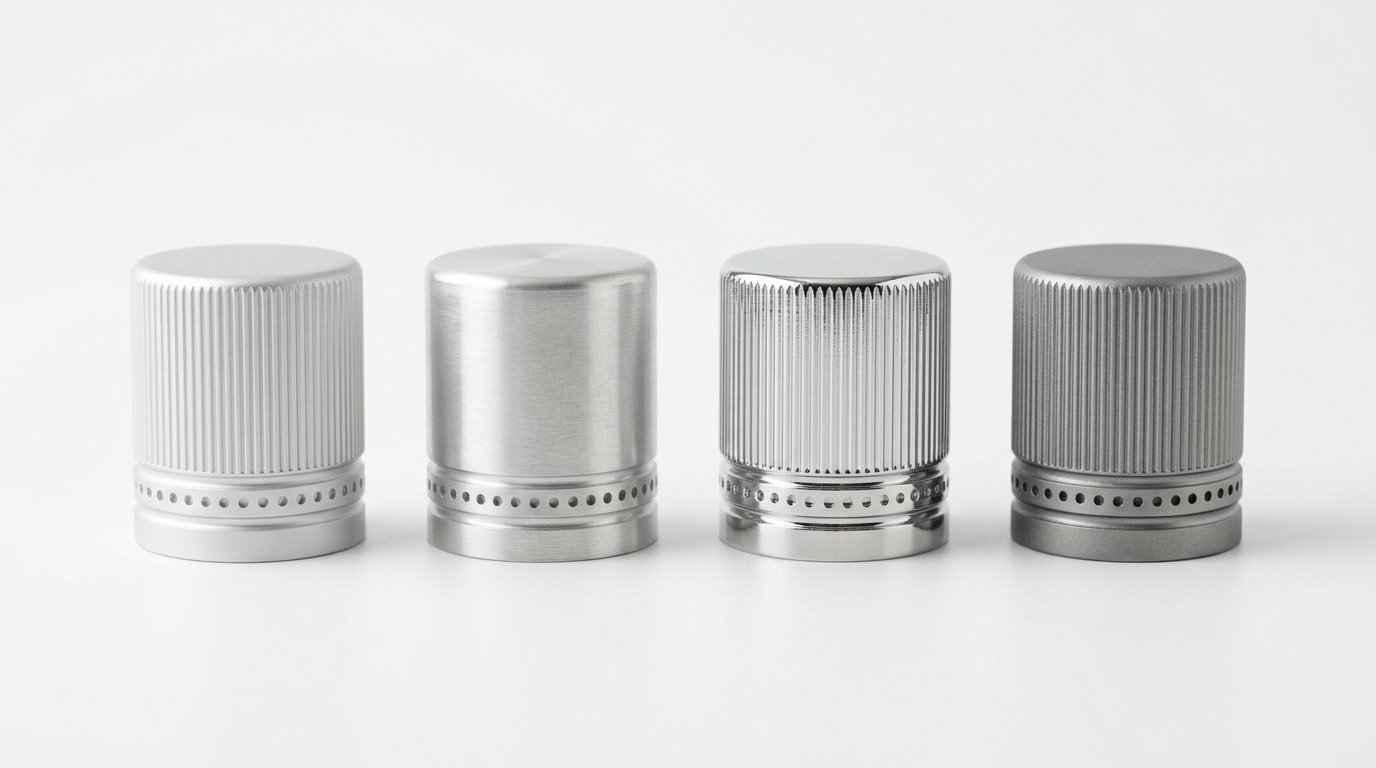
| Silver (plain aluminium) | A premium or glass-bottled water | Usually an aluminium roll-on cap left undecorated. It tells you the closure type, not the water |
| Gold, bronze or a metallic tint | Premium, imported or special-edition water | A decorated aluminium cap. Brand choice |
Because there is no enforced code, two brands can put the same colour on completely different products. Reading the label and the certification marks is always more reliable than reading the cap.
Why colour is a brand convention, not a standard
The standard packaged drinking water is judged against in India, IS 14543, sets requirements for the water, the packing and the label. Its packing clause asks for clean, hygienic and tamperproof food-grade containers. Its marking clause lists what must be printed on the label: the product name, the processor’s name and address, batch number, dates, net quantity and storage directions. Neither says anything about cap colour. The detail is in IS 14543 explained.
Certification works the same way. BIS certification for packaged drinking water has been voluntary since FSSAI notified the omission of the clauses that made it compulsory on 17 October 2024, while an FSSAI licence stays mandatory. Neither the ISI mark nor the licence depends on the closure colour. BIS certification for a water brand sets out the process.
So a brand can legally sell still water under a green, black or silver cap. The colour is chosen for reasons like these:
- Matching the brand’s identity and label design
- Standing out on a crowded shelf
- Separating one SKU from another, such as still against sparkling, or 500 ml against 1 litre
- Signalling a premium tier through a darker or metallic finish
What actually tells you about the water
If you want to know what is really in the bottle, check these instead of the cap colour:
| Signal | What it tells you | Where to look |
|---|---|---|
| ISI / BIS mark | The water is certified against the BIS standard, which is voluntary rather than compulsory | Printed on the label with a licence number, where the brand holds one |
| FSSAI licence number | The producer is a licensed food business | On the label |
| Product name | Whether it is packaged drinking water, natural mineral water or carbonated | Front label |
| Tamper-evident seal | Whether the bottle has been opened before | The cap’s pilfer-proof band, which a tamper-evident cap explains |
| Batch, packed and expiry dates | Freshness and traceability | Label or neck print |
Where the cap colour does carry meaning
The one place colour is meaningful is within a single brand’s own range. A water company will use colour deliberately and consistently to help buyers tell its own products apart, for example a blue cap for still and a green cap for sparkling across the same label family. That internal consistency is a branding decision the brand controls, which is why aluminium ROPP closures are offered in custom colours, plain silver or litho-printed finishes. It lets a brand own a colour rather than follow a rule, and it is one of the reasons premium water brands specify aluminium caps.
Choosing a cap colour for a water brand
Pick the colour as part of the range, not one bottle at a time.
- Decide what the colour has to separate. If the range will carry still, sparkling and flavoured SKUs, assign each a colour now, so a later launch does not force a change.
- Check the shelf, not the brand book. A blue cap in a chiller of blue caps disappears. Look at the cooler your water will stand in.
- Match the cap to the label, not the reverse. A closure colour will read slightly differently on metal than the same reference does on a paper or film label.
- Choose the finish tier with volume in mind. Plain silver is the lowest minimum order, a brand colour the next step, and litho printing the highest.
- Hold the colour across reorders. Keep a signed master cap and quote its reference on every order.
On an aluminium closure the tiers carry different minimums. At R Vision they are 50,000 caps for plain silver, 200,000 for plain colours and 300,000 for litho printing, with a lead time of 4 to 6 weeks. Why decoration sets the minimum is explained in what MOQ means for bottle caps.
How colour matching works in production
On aluminium closures, colour is a coating and printing step on the metal before the cap is finished, so a brand colour is matched rather than picked from a fixed palette.
| Stage | What happens | What the brand supplies or approves |
|---|---|---|
| Reference | The brand gives a colour reference: a standard colour code, a physical sample or the label artwork | The reference and the surfaces it applies to, top or side |
| Shade development | The closure maker adjusts its coating or ink to hit the reference on aluminium | Nothing yet |
| Trial on metal | A trial panel or trial caps are produced | Approval, ideally judged under agreed lighting |
| Master sample | An approved cap is signed and retained by both sides | Signature on the master |
| Production checks | Each run is compared against the master, visually or with a colour measuring instrument | A tolerance agreed in writing, if the brand needs one |
Two practical points. Metal changes colour: a translucent tint over bare aluminium reads metallic, while a solid colour needs an opaque base, so the same reference can look different on a cap than on a label. And “matched” needs a definition. Agree whether approval is visual against the master or measured, and what counts as a pass, before the first run.
At R Vision, colours are customised to the brand, and colour references, artwork formats and the approval route are agreed at enquiry. Decoration options are covered in custom printed and embossed bottle caps, and R Vision’s Aqua Cap, an aluminium ROPP closure for packaged drinking water, is available in plain silver, plain colours and litho printing so a water brand can set and keep its own colour language across its range.
Frequently asked questions
Is there a legal meaning for water bottle cap colours in India?
No. Indian food and packaging regulation covers water quality, labelling, certification marks and a tamperproof pack, but it does not assign a meaning to cap colours. IS 14543, the standard for packaged drinking water, lists what goes on the label and how the water is packed, and says nothing about closure colour. Any association you have seen is a brand convention.
What does a yellow cap on a water bottle mean?
Nothing fixed. A claim shared online says yellow means water with added vitamins or electrolytes, but no BIS or FSSAI rule sets that, and brands use yellow for many reasons. If a water has anything added, the label is where that has to be declared, so read the label rather than the cap.
Does a blue cap always mean still drinking water?
No. Blue is the most common colour on still packaged drinking water in India, so it is a fair guess, but it is not guaranteed and some online claims say it means mineral water instead. A brand can use blue for any product. Check the product name on the label and the ISI mark to be sure.
What does a black cap on water mean?
Black is often used for premium or alkaline water, by brand choice rather than rule. Whether a water is alkaline, and at what pH, is a claim the brand makes on its label, not something the cap colour proves. Read the label and treat the colour as positioning.
Should I choose water based on cap colour?
No. The reliable signals are the ISI or BIS mark, the FSSAI licence number, the product name and an intact tamper-evident seal. Cap colour is a branding choice and can differ from one company to the next, so it should not be your deciding factor.
Can a water brand choose any cap colour it wants?
Yes. No Indian rule restricts closure colour for packaged drinking water, so the choice is the brand’s. On aluminium closures, the colour is matched to a reference supplied by the brand and approved against a signed master sample, and a brand colour usually carries a higher minimum order than a plain silver cap.
For a closer look at closure types and finishes, see the types of bottle caps guide, work through which water bottle cap is best for your segment, or explore the Aqua Cap product page. More closure guides are collected on Learn.