
 Sankalp
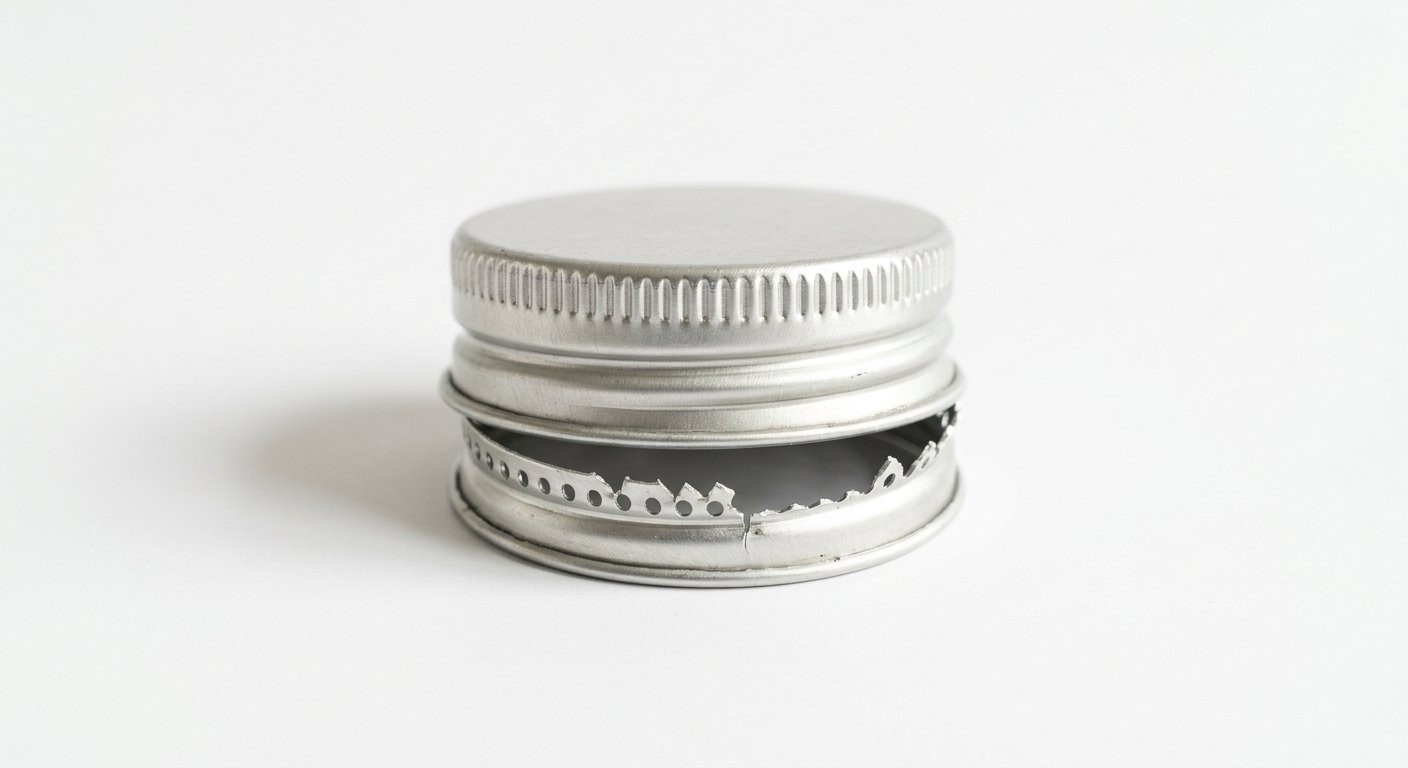
A resealable tamper-evident cap keeps its pilfer ring attached to the closure after the bottle is first opened, so the consumer can re-close the bottle while the broken ring stays visible as proof it was opened. This is called ring-retention design. R Vision’s Bev Cap uses it, with the pilfer-proof ring staying attached and a choice of Round Ring, Two Slit, and Five Slit variants.
The trade-off ring retention solves
A traditional pilfer band drops off the bottle entirely when opened. That gives clear tamper evidence, but the ring becomes loose litter and adds nothing after the first opening. For a beverage a consumer drinks over time, a bottle that reseals cleanly is more useful, yet the brand still needs the seal to show whether it was opened before purchase.
Ring-retention design resolves that trade-off. The ring separates from the cap’s sealing action on first opening, so tamper evidence is real, but it stays tethered to the closure rather than falling away. The bottle can then be screwed shut again and again, while the ring remains as a permanent record that the original seal is broken.
How Bev Cap does it
Bev Cap is R Vision’s aluminium ROPP beverage closure, and its pilfer-proof ring stays attached to the cap after opening. That is what makes it resealable and tamper-evident at the same time: the consumer re-closes the bottle normally, and the attached ring keeps showing that it has been opened.
Bev Cap offers three ring variants, so a brand can pick the break behaviour that suits its bottle and consumer:
| Ring variant | Behaviour |
|---|---|
| Round Ring | Continuous retained ring |
| Two Slit | Ring with two slit points controlling the break |
| Five Slit | Ring with five slit points for a lighter, more distributed break |
Underneath the ring, Bev Cap is a 28/15 mm aluminium ROPP closure rated to 8 bar with a PVC-free TPE liner, adhering to USFDA and EU standards. So the resealable ring sits on a closure already built for carbonated and non-carbonated beverages; the pressure side of that job is covered in closures for carbonated soft drinks.
Why it suits beverages
- Reseal and reuse. A carbonated or still drink often is not finished in one go, so a bottle that re-closes keeps the product usable.
- Tamper evidence stays visible. The attached, broken ring still tells a buyer the bottle was opened, so trust at the shelf is intact. Water closures take the opposite route, with a three-part break ring that drops away.
- Less loose litter. The ring stays with the closure instead of dropping off, which is a cleaner outcome for the consumer. The same litter argument drove the EU tethered-cap rule, weighed for this market in tethered caps: will India follow the EU?
Frequently asked questions
What is a resealable tamper-evident cap?
It is a closure whose pilfer ring stays attached after the first opening, so the bottle can be re-closed while the broken ring remains visible as tamper evidence. The design is often called ring retention.
How does ring-retention design work?
The ring separates from the cap’s sealing function on first opening, giving real tamper evidence, but stays tethered to the closure instead of falling off, so the bottle reseals with the ring still showing.
What ring variants does Bev Cap offer?
Bev Cap comes in three variants: Round Ring, Two Slit, and Five Slit. They differ in how the retained ring breaks on first opening.
Is Bev Cap still tamper-evident if the ring stays on?
Yes. The ring breaks on first opening and stays broken. Keeping it attached does not undo the tamper evidence; it just means the ring is not lost when the bottle reseals.
To choose a Bev Cap ring variant for your bottle, see the Bev Cap page, the Bev Cap product listing, or contact R Vision. For the regulatory backdrop see tamper-evident packaging in India, and for everything else the Learn library.